As I began to explore the concept of something having value, or worth, I considered it in personal context; as what I class as valuable to me. I made a generalised list off the top of my head –
My Valued Things
People
Pets
my home
my bedroom
plants
my furniture
clothes
my gadgets
art
Property
My thinking tangentially moved on, and I considered how I value literal space. I love the large, Victorian house I live in, particularly my bedroom which contains all of my possessions, however, I – like many others, daydream of even more space. More rooms, with more space, all to myself.
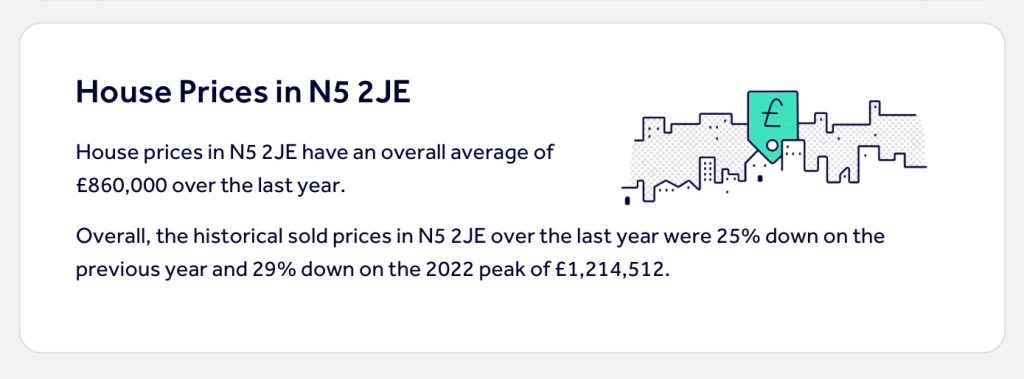
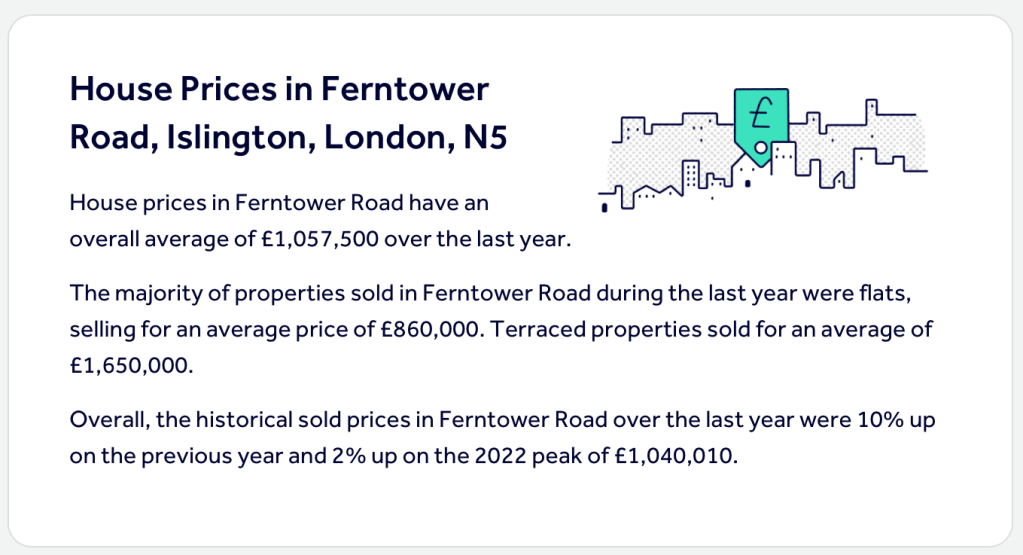
I considered the realistic price of this in the area I live in (private renting in Highbury, London), and conducted an online search to see how much the average price of a property with this postcode is currently to rent, and to buy.
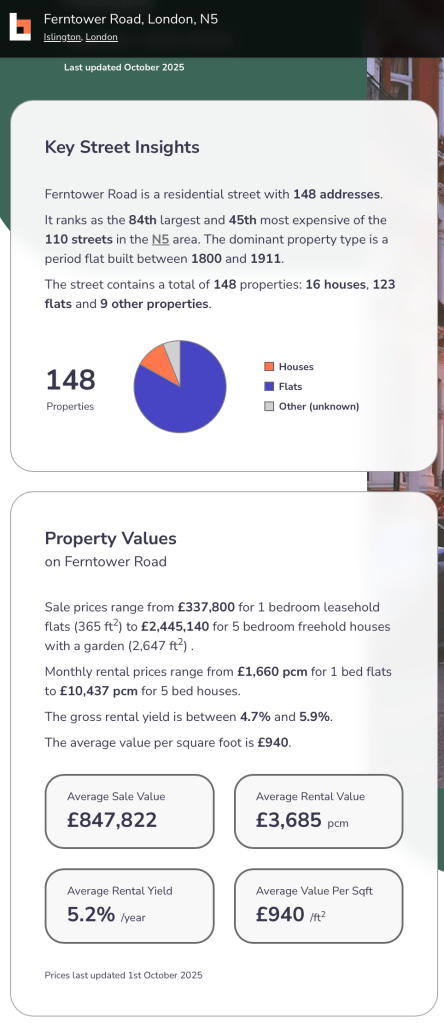
I was interested initially in how much space was available for the price. The website ‘Bricks & Logic’ was able to provide the most detailed results for this query, quoting a minimum £340,000 for a one bedroom flat (with approximate floor space of 365ft2), and £2.5m for a five bedroom house with a garden. The prices to rent would be upward of £1,600pcm for a one-bed flat, and £10,400 for a five bedroom house.
(screenshot from Rightmove)(screenshot from Rightmove)(screenshot from Bricks & Logic)
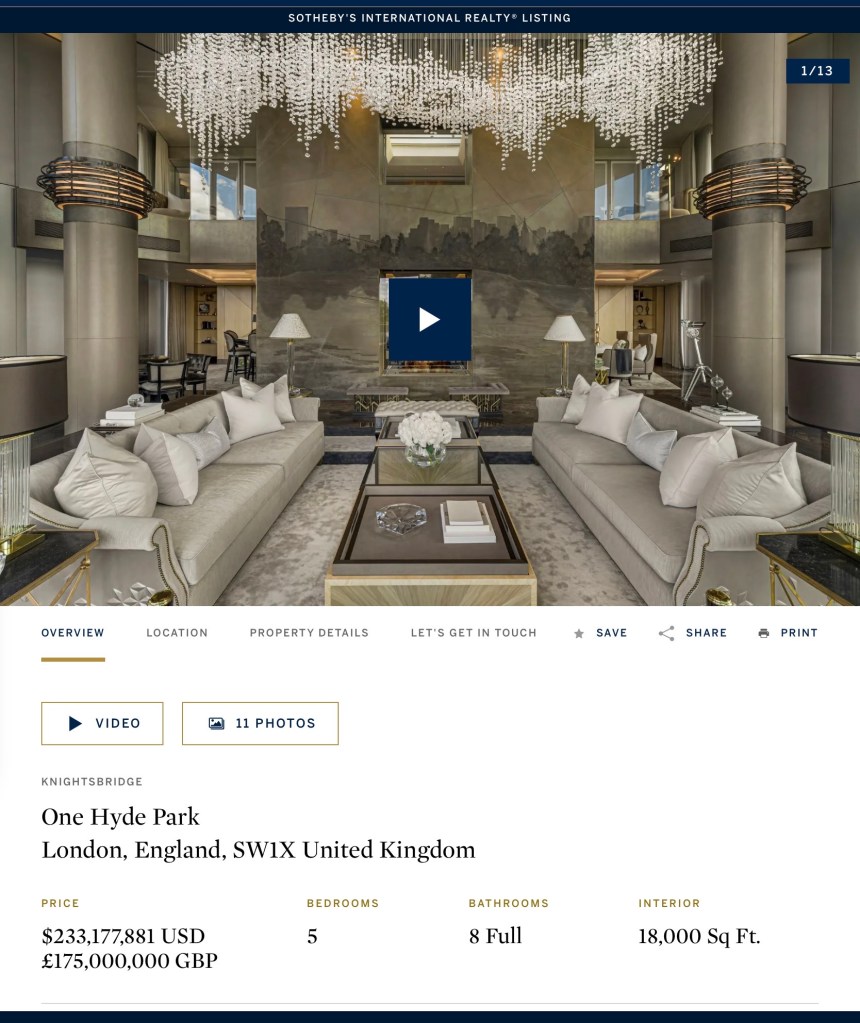
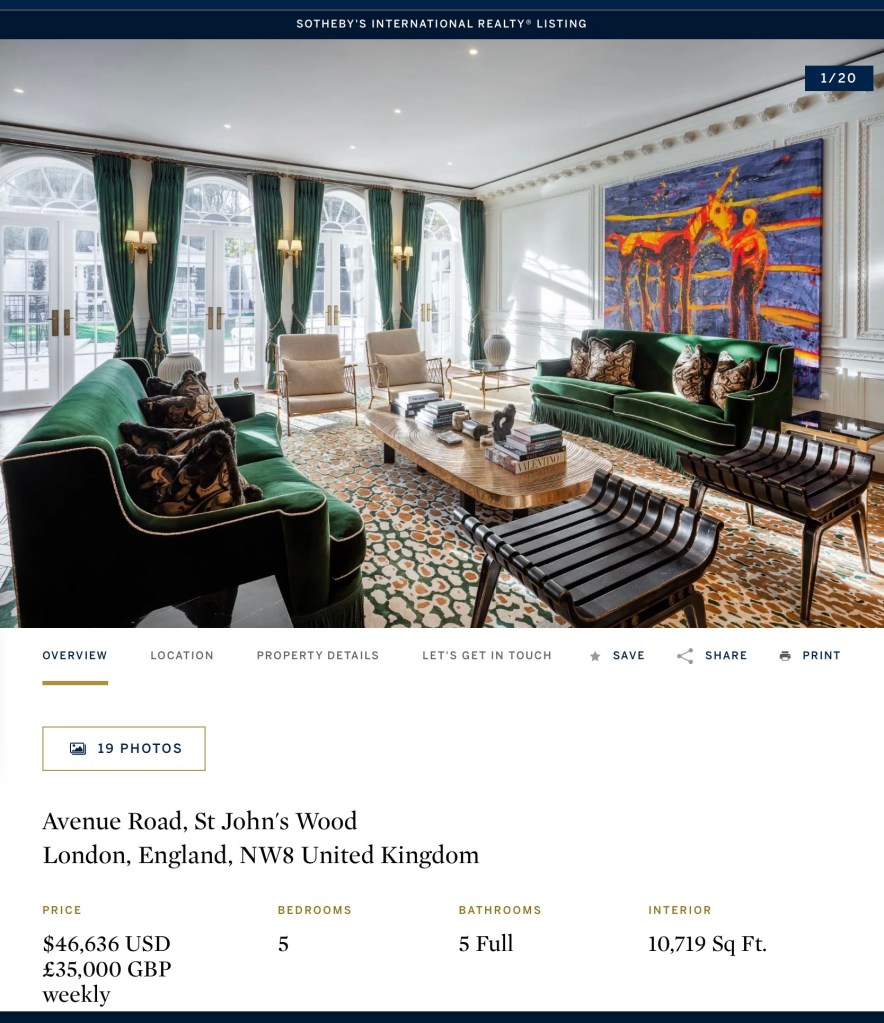
I then ran a comparison search, for the most expensive properties in London, in which the most expensive property to buy cost £175,000,000, with an interior floor space of 18,000 Sq Ft. The most expensive rental I could find on the market was £35,000 per week, with an interior floor space of 10,719 Sq Ft.
(screenshot from Sotheby’s)(screenshot from Sotheby’s)
My thinking feeling slightly off-topic, I began to consider what other aspects people may value about where they live. At this moment, a siren wailed past outside and I was reminded that not everyone would choose to live somewhere as busy, and noisy as London. This thinking lead me to my first idea, to create a sound-scale.
Influences
(taken at ‘Matanzas Sound Map’ at Tate Modern)
I had thought to present the recordings as a map of the UK, where clicking on a particular location would start playing the recording, however, I didn’t feel I had enough locations for this idea to work. As a point of reference for creating a sound map, I had in my mind an exhibition I had previously experienced at the Tate Modern – ‘Matanzas Sound Map‘, by Maria Magdalena Campos-Pons and Neil Leonard. The exhibition room itself was very large and cavernous feeling, with various objects distributed on the floor either side of a metal, hanging, picture panel, Around the octagonal shaped room were eight speakers, playing sounds such as birdsong, wind, music, from Matanzas itself (a region of Cuba). Although the sounds were loud and alternated which speakers they came from, the overall feelings I got from the experience were of calm, balance, and harmony with nature. I felt I could almost see the trees above where birds would be hiding; feel the heat of a Cuban climate mixed with salt in the air from a sea breeze – whilst standing in an industrial looking concrete room, in the centre of London.
Undertaking research into soundscape artists for this project I also looked into the work of Mikhail Karikis who explores listening as a form of care when using sound to focus on climate issues. His work includes use of breath, speech, choral singing/ chanting, and instruments. Some of the volume builds through his work (shown even in trailers of his work such as ‘Songs for the Storm to Come‘) felt intense, despite having started very gradually. Again, I enjoy this effect, despite how much discomfort I personally feel with loud noises, and the final two recordings I obtained from friends in Glasgow and Bournemouth respectively, I felt achieved this building intensity in a similar way. Mikhail Karikis also uses long panes of (presumably) plastic to create wind-like sound effects. This made me consider how the sound of the wind in the final piece may differ in person to how it sounds being recorded through a speaker and then played back.
Sound Scale
I asked some friends to record 1 minute of audio from outside their front door, at street level, at the same time (6pm), on the same Monday evening (27/10/2025). I expected the results would vary considerably as I was asking people from different parts of the UK – in both cities and rural areas. I also expected the property prices in these areas would differ, but not necessarily correlate to which recordings had more or less sound.
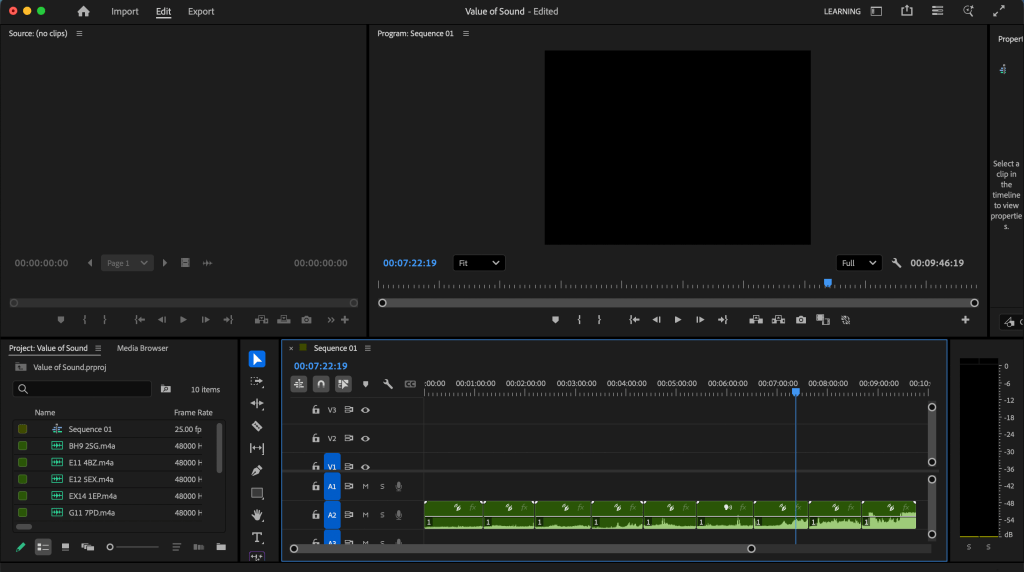
Despite looking into property prices, (buying and renting) for each of these postcodes, I was now much more interested in the different audio recordings I had received. I decided to create a value scale organising the recordings from quietest to loudest. To edit my sound-scale together, and so I was able to view the sound waves for each recording accurately I used Premier Pro.
(screenshot from Premier Pro)
LISTEN BELOW
Reflection
I really enjoy the process of editing in Premier Pro, and I was pleased with the end result of this project. I particularly like that the recording begins so subtly – to me (who has lived in London nearly all my life) the background hum of traffic is essentially silence. However, over the length of the recording, despite quite obvious editing together, the sound builds naturally, until by the final segment it is almost unbearably loud. The noise in the last segment is the wind, as the recording itself was captured in Bournemouth along the south coast of the UK.
Breaking down my thoughts on this experiment, I enjoy particular moments, such as the sirens in the background of one clip, recorded in Leytonstone, East London. For me, although I find sirens to be alarmingly loud as they drive past – I find the background notes of them in this clip to induce a feeling of familiarity and home. I found the vast differences in volume and sound from different parts of London alone, very interesting. The quietest recording gathered from that same night, at the same time, was from outside my own house. This is therefore the first recording in the sound-scale; in it you can hear someone sniffing as they walk past which initially annoyed me as it seemed almost directed toward the phone I was recording from. It later occurred to me that on a busier night or time it may not have been detectable amid the other sounds but just so happened that at this particular moment it was quiet enough. Other than the person’s sniffing there is no other notable sound from my address, which is only sometimes the case, living in a reasonably busy, semi-pedestrianised, road in Islington. I was surprised that my recording returned quieter than some taken from much more remote locations in rural areas, such as Exeter, where the second recording was made.
Another favourite clip of mine is the second to last, which was taken in Glasgow, Scotland. To me, it sounds very industrial, with the low buzz of a nearby engine throughout and some louder traffic noise toward the end. My least favourite recording was the final one, from Bournemouth, as for me the wind in the speaker is overwhelmingly loud, however I enjoy the clash of the idea of a peaceful seaside aesthetic with the jarring, manic sound of coastal wind.
Whilst the sirens and engines in my recordings may be a far cry from relaxing waves breaking on a shore in Cuba, I wondered the overall effect of sound mapping using the different recordings I had gathered, around a room which would (not to scale) represent the UK. Perhaps similarly to the Matanzas Sound Map, there could be inclusion of visual aesthetics to indicate location, such as a red post box, a bus stand, street signs, and common/ native wild flowers.
There were some other ways I considered presenting this project and may return to at a later time. I considered the use of still images, gathered from Google searches at each postcode, as well as a rundown of the overall price estimations at the lowest & highest priced addresses under that particular postcode. A reason I decided not to go ahead with this at present is because of the social taboo of discussing money and property value. I had asked friends for one type of information to be shared with me – being one minute of audio from outside their houses at a particular time. Perhaps if I had prefaced asking for their help with more of a complete idea of this particular idea, and therefore told them the prices of their houses would be taken into account and potentially viewed as part of my work, my friends may have felt differently about contributing. All the information I sought, other than the audio recordings, was available to me online, but this does not mean I would’ve necessarily had consent to ultimately broadcast what people may have paid for their houses.
Despite enjoying the process and appreciating the results, I didn’t feel this project had much left to explore at this time that excited me, and so I decided to refocus myself back on the theme of ‘value’.
 Squirrel M. Lambert