- Painting Preparations
- Research and Influences
- Next Steps
- Instruction Manual
- Small Model
- Photo Series
- Planning & Problem Solving
Painting Preparations
Following on from my Unit 2 Formative Hand-In; I began to watch the footage I had recorded of myself painting. For the filming itself I used two cameras – my iPhone 12 Pro, set up to capture the canvas as I painted it, and my Canon DSLR camera, which I positioned to film myself (specifically my upper body) as I painted. The initial idea was to paint as freely as I could, and to document the process both on canvas, and my face, for 45 minutes until my set timer would go off. I did this with two
As I began watching the footage back (first from the DSLR) in real time, I felt frustrated by the long period I spent setting up the space prior to painting anything. As I clicked and dragged the cursor over the timeline in Adobe Premiere Pro, I wasn’t particularly excited or inspired by watching myself paint, or by watching the canvas change as I painted it in the other video I had recorded on my iPhone.
Initially on watching the footage I contemplated editing it to be 300% faster playback speed. I initially uploaded the two preparation videos at the faster speed, however changed my mind so as to emphasise my point a little clearer – that I took a frustratingly long time to begin, despite the cameras’ initial purpose of documenting my creative act.
This was the second painting I attempted to resume. I spent less time in preparation than I had previously – I’m unsure what the cause of this exactly was. I began with a simpler mix of acrylic paint, and the canvas itself was sketched on previously – so I had guidelines to follow, unlike the first resumed painting.
As I was painting, I remember being aware of the cameras throughout, which I felt put me off – as it felt pressurised, and false. I also wasn’t particularly enjoying the process as I normally do, which I largely put down to having had no reference image or clear memory of the subject I was resuming painting (my friends’ cat). There was also a difference in how I felt about completing the painting, compared to how I remember having felt previously when I first began work on this canvas in 2024 – I was aware that I was the intended audience for the piece now, having already completed another painting of the same cat which I had gifted to my friends in late 2025. The sole purpose at this point was just to complete the painting, and so I felt myself come to a natural stop after only about thirty minutes.
At this point I felt I must take a look at my process again – having spent much longer setting up prior to painting than I then did painting, and part of me felt maybe I had enjoyed the set-up more than the creative experience on this particular occasion. I had created a perfect space for myself, and achieved a level of inner peace before I even touched paint onto the canvas.
Following an idea my tutor mentioned during my Unit 2 Formative feedback session, I had another look over my preparation stages and to do lists, and considered a new concept to focus on – what, for me, make the perfect painting conditions? I had previously documented some of my thoughts around this in a post on my Creative Journal.
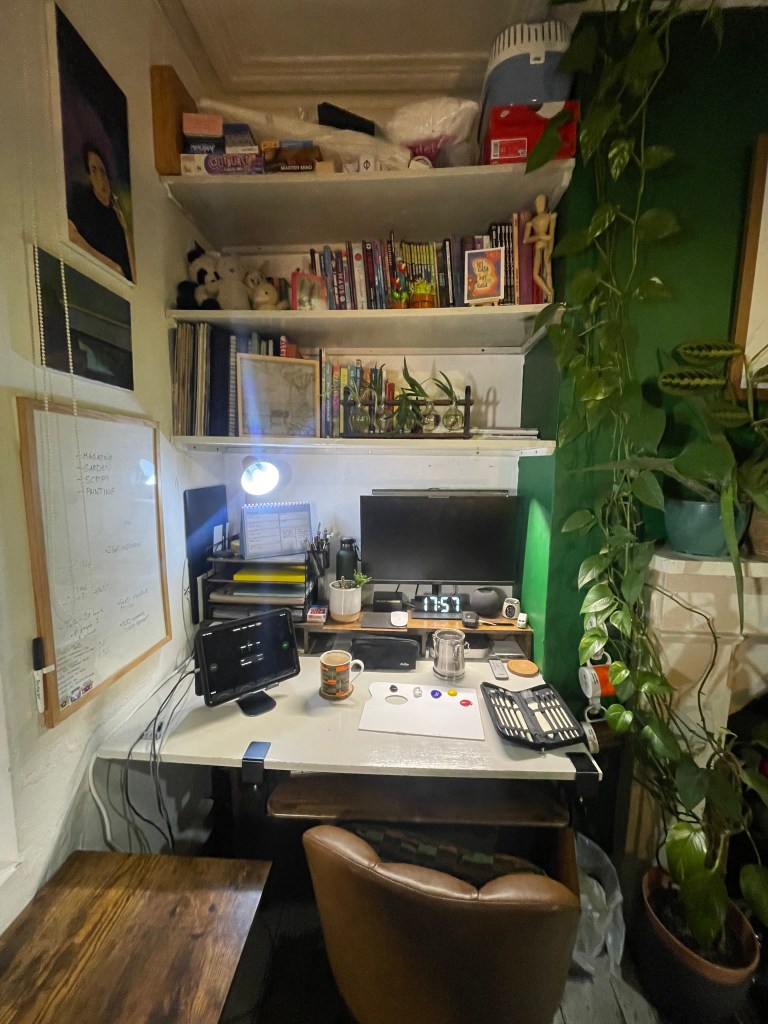
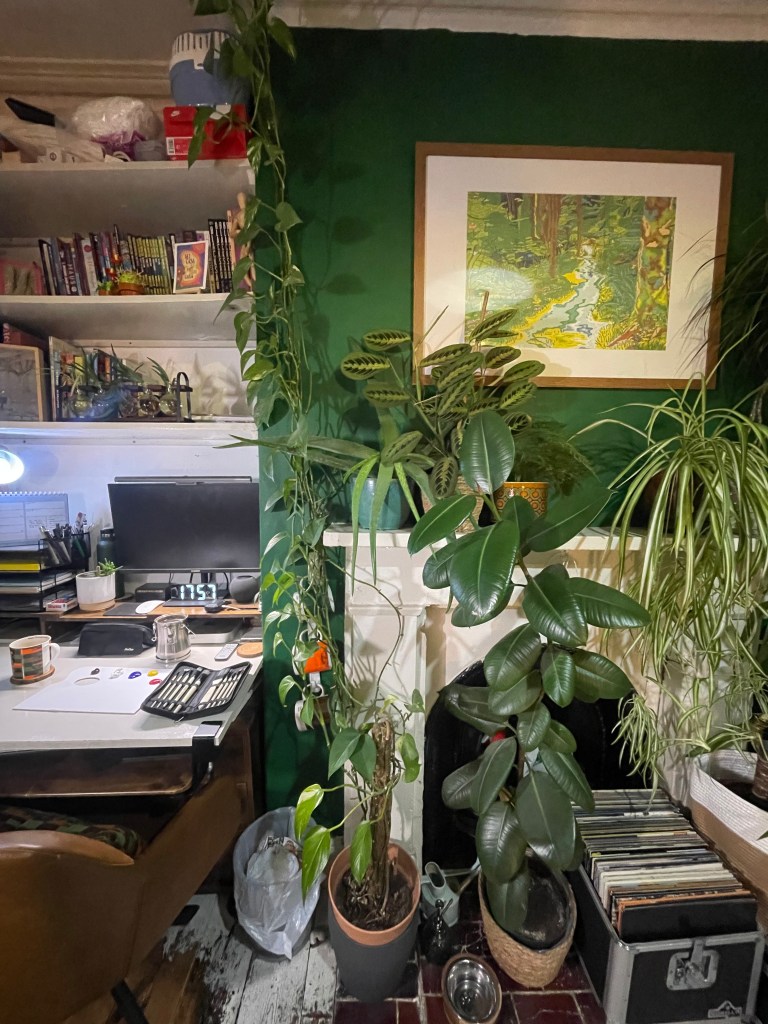
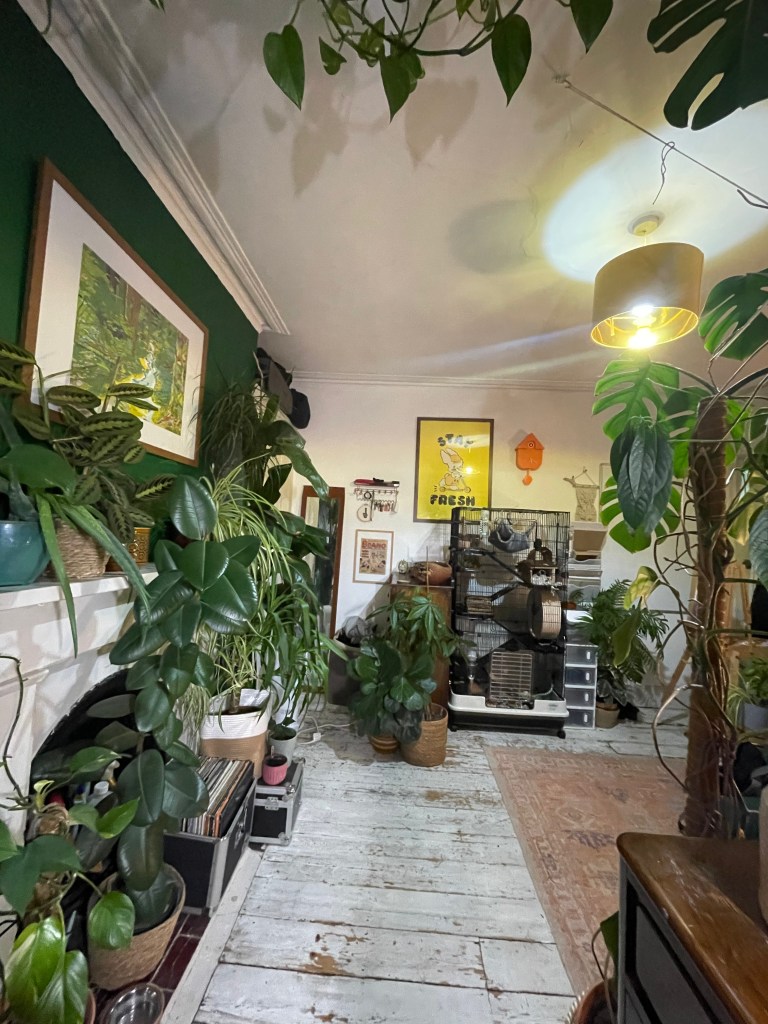
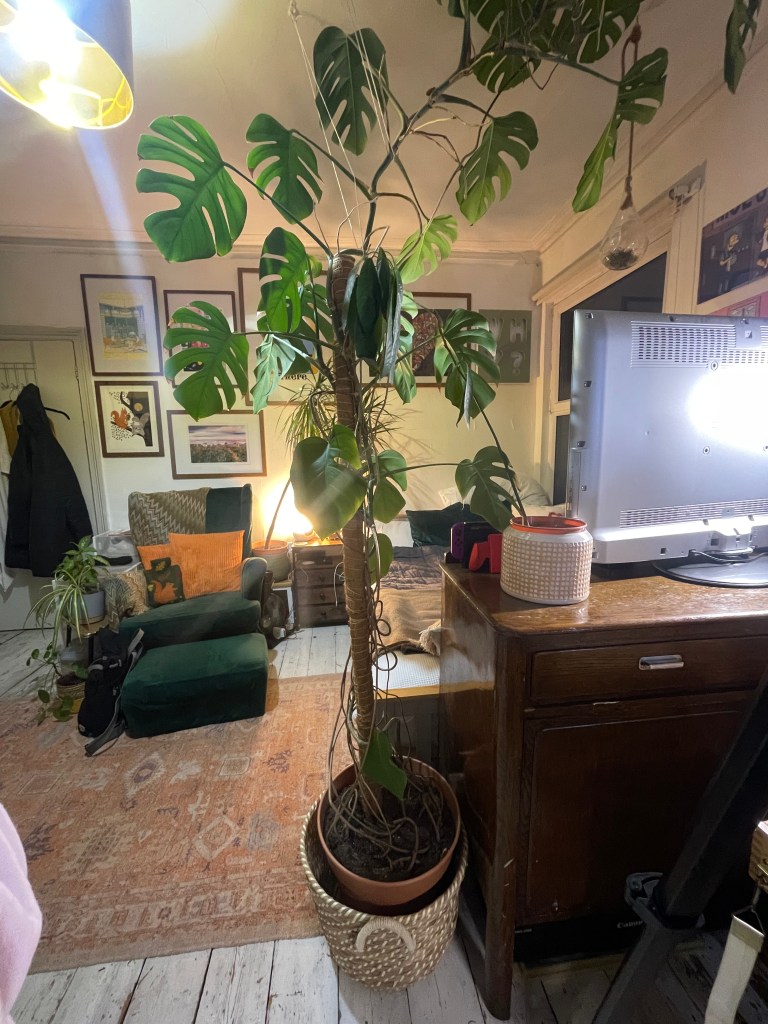
As we were approaching a crit of our work so far within our pathway, I felt most excited by the idea of sharing my passion for creating in general, and the sanctity I feel within my own creative space. I considered the space in which I find myself most comfortable to create – my rented, large, double bedroom within the shared house where I live. It’s not necessarily the perfect place for everyone, but it’s certainly my happy place. I then contemplated how I could share this exact space and feeling with others, however I think everyone’s happy place should look different to the next person, and of course these spaces can change over time according to our own needs and desires.
I took photos capturing my room at different angles, from the position I stand in to paint when at home. I then printed these pictures out onto A4 paper and stuck them to the inside of an old, cardboard box. I really liked the aesthetic of the poorly printed images, roughy mapping out a space within the box itself. This lead me to my next, and final, idea to focus on for the remainder of Unit 2 – creating a pop-up version of my own perfect painting space.
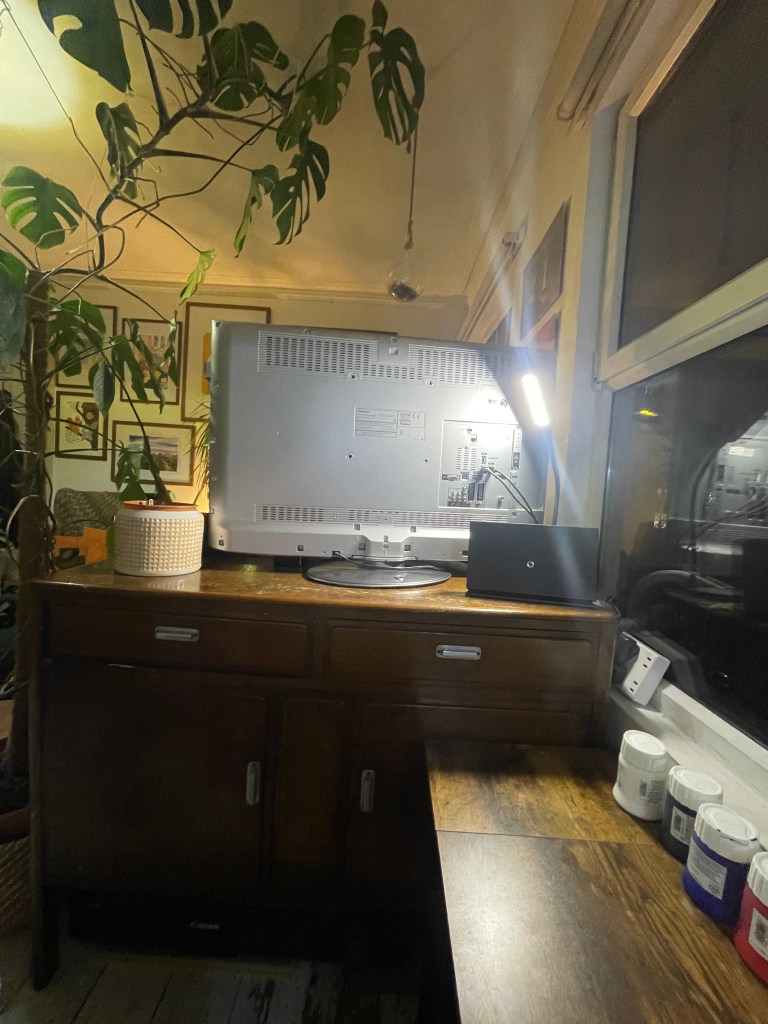
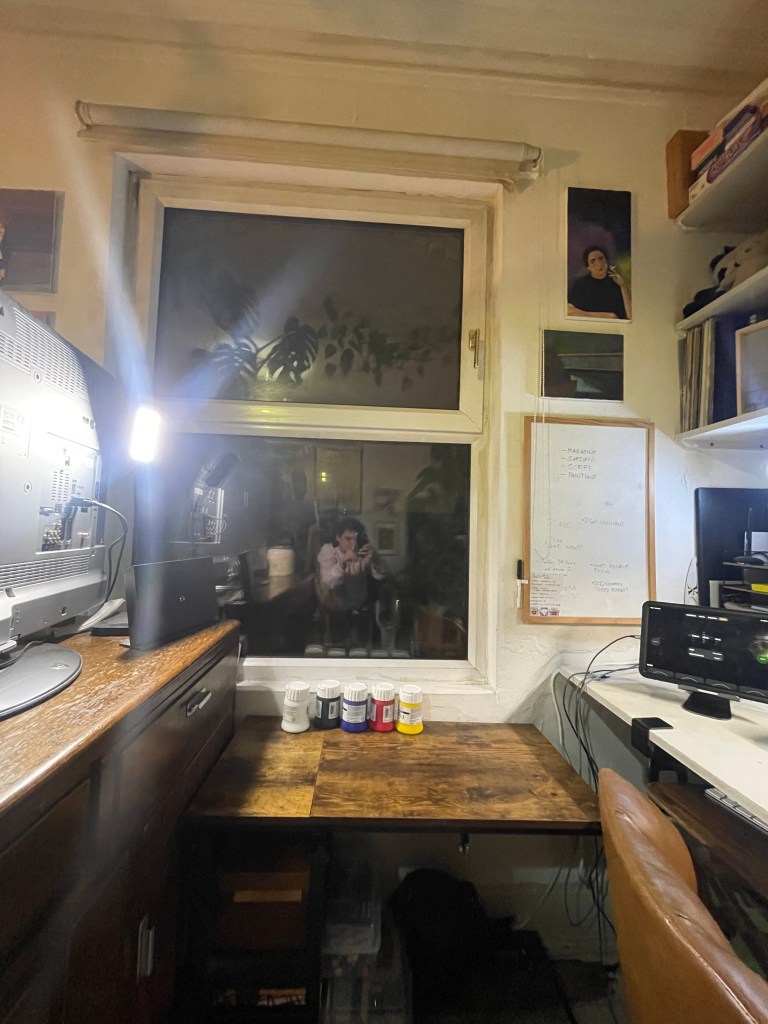
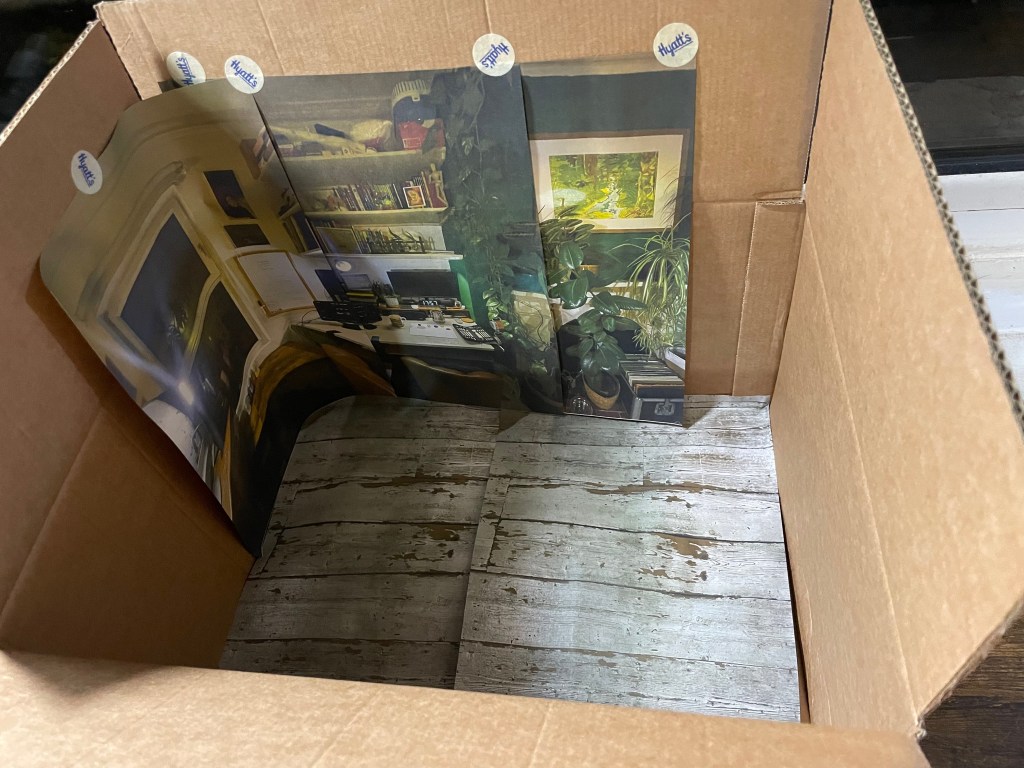
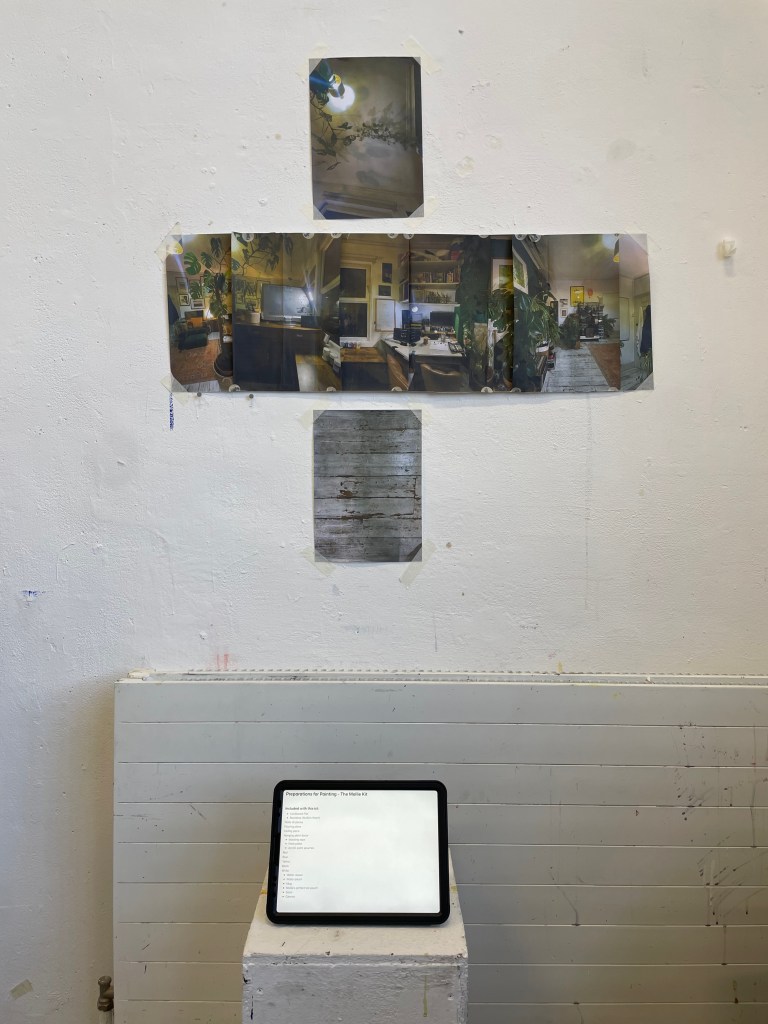
Research and Influences
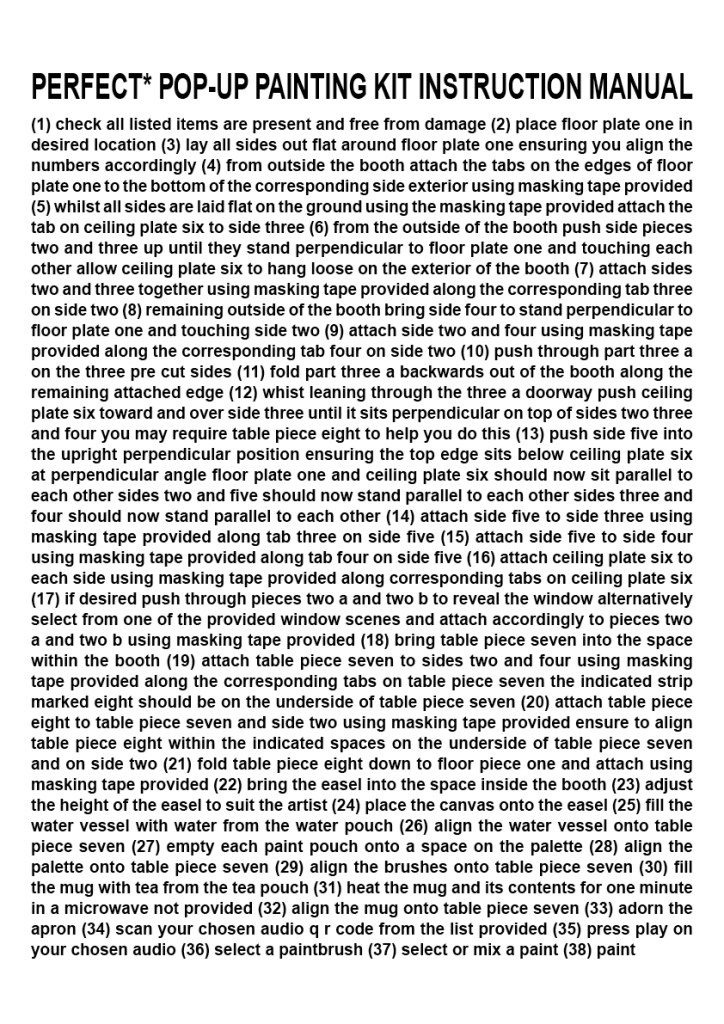
My main influence for the next visual idea was based on feedback I received in the crit, where I presented my work as a series of stuck together photographs printed on A4 paper, in the shape of a flattened out box/ booth, and used my iPad screen to show a list of equipment the ‘painting kit’ would include. My work at this point felt more in it’s physical depiction; one of my tutors commented that it would be interesting to see the preparation steps – as I verbally explained they would be – presented in text format. I took this quite literally in my experiments, and after a while of playing with different formatting decided to even replace the digits with their written forms; eg, ‘side 2’ became ‘side two’.
I followed a research recommendation and looked into Thomas Hirschhorn’s work Cavemanman (2002). Firstly I was struck by the seemingly (on first glance) simple, and D-I-Y style aesthetic. There is something innocent, but exciting for me about the use of simple, recyclable materials – particularly paper, cardboard, and packaging / masking tape when used as construction materials, it feels nostalgic and child-like to create using commonly discarded materials. This feels reminiscent of playing with / in large cardboard boxes as a child. Images of Cavemanman seem den-like to me, as though first of all I see the potential for fun in creating something on such a large scale for people to be able to walk around in and explore. I am very much interested in creating installation art for this reason – I feel excited by the prospect of making people feel, think, and do within an experience they can tangibly remember. Being able to interest and captivate people enough to get them to independently move around a space and engage with aspects feels powerful.
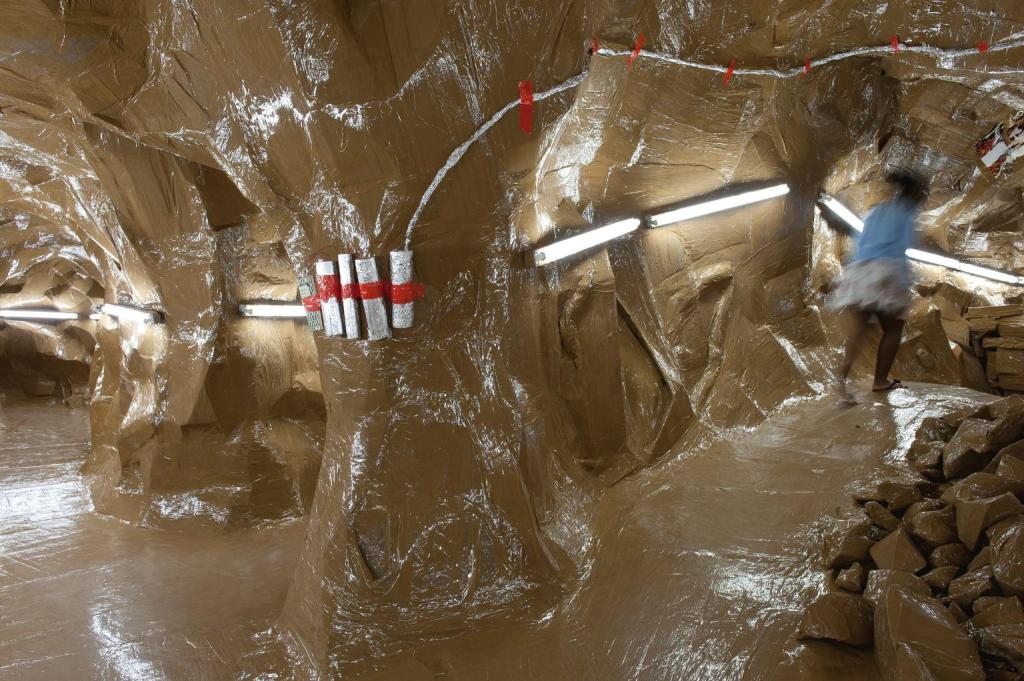
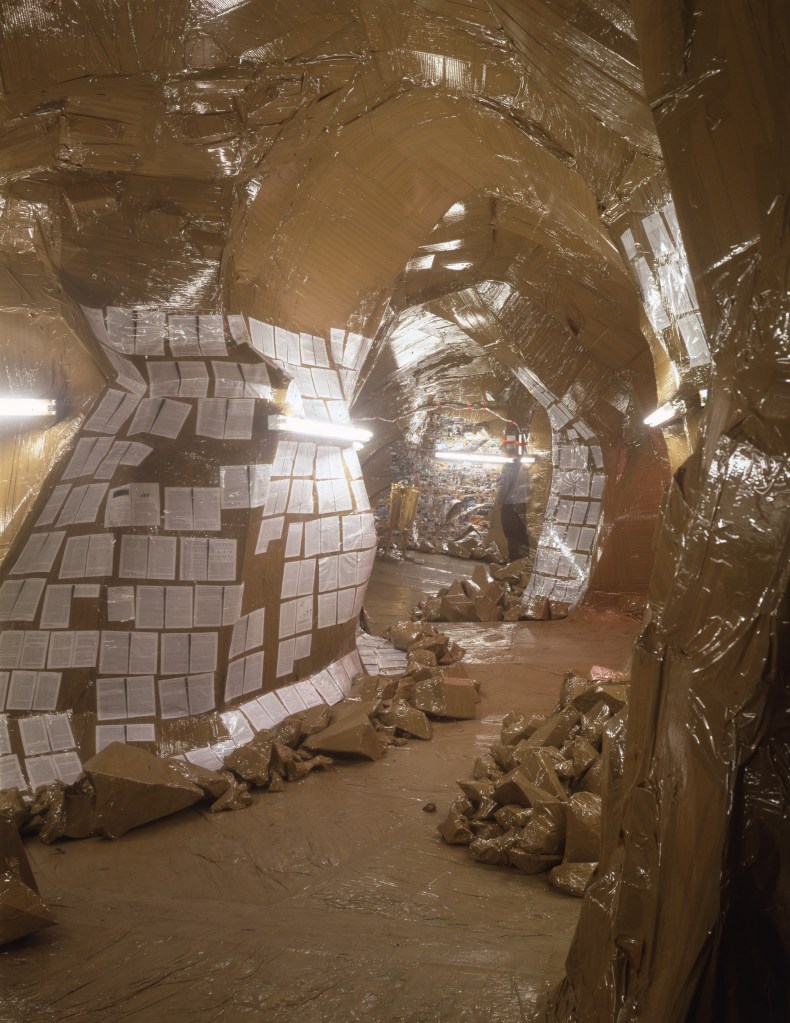
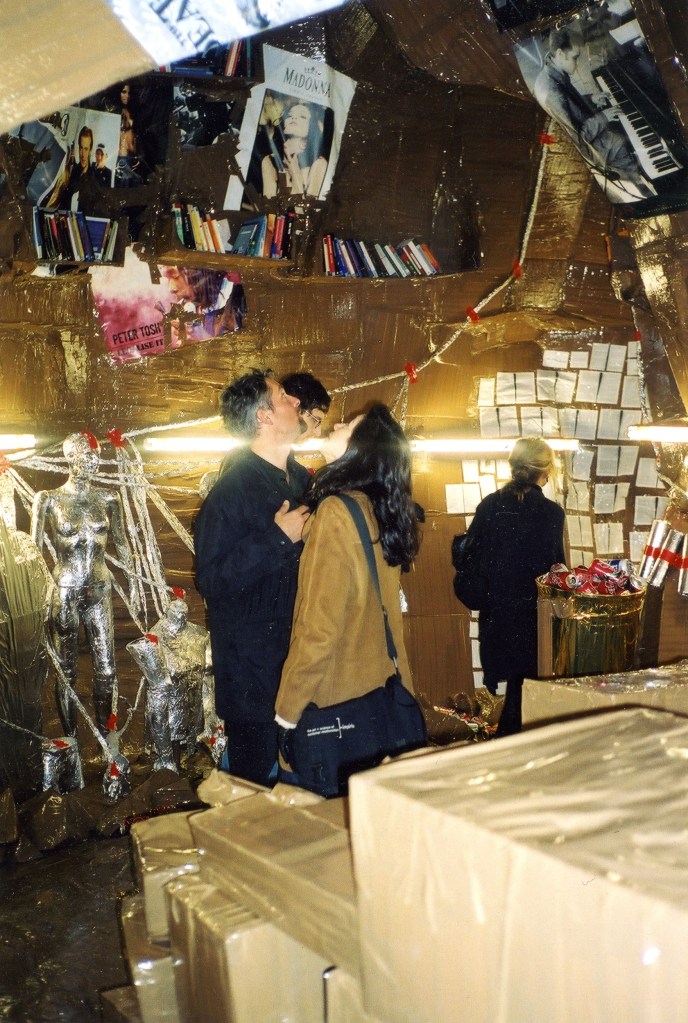
Relating this to my own ideas at present, I am still very keen to create a pop-up space, similarly using recyclable, aesthetically cheap materials. This feels figurative within the context of the piece – as the ‘perfect space’ I am aiming to create will be humorous, and ironic in its approach, meaning – I don’t know how “perfect” a personal, cardboard, booth can ever be made to feel when placed in varying, busy locations, as I plan to experiment with photographically. On this note, I like that in the photographs of Hirschhorn’s work there is a clear reflected light on the walls of the created ‘cave’ – again, this is somewhat nostalgia-evoking for me, and leads me to remember the appearance of photos placed in classic, plastic-lined, albums. These types of reflections are now often regarded as unwanted in many modern, social-media-bound images, however I like making sense of textural impressions I can deduce from the photographs of various materials in the exhibition space.
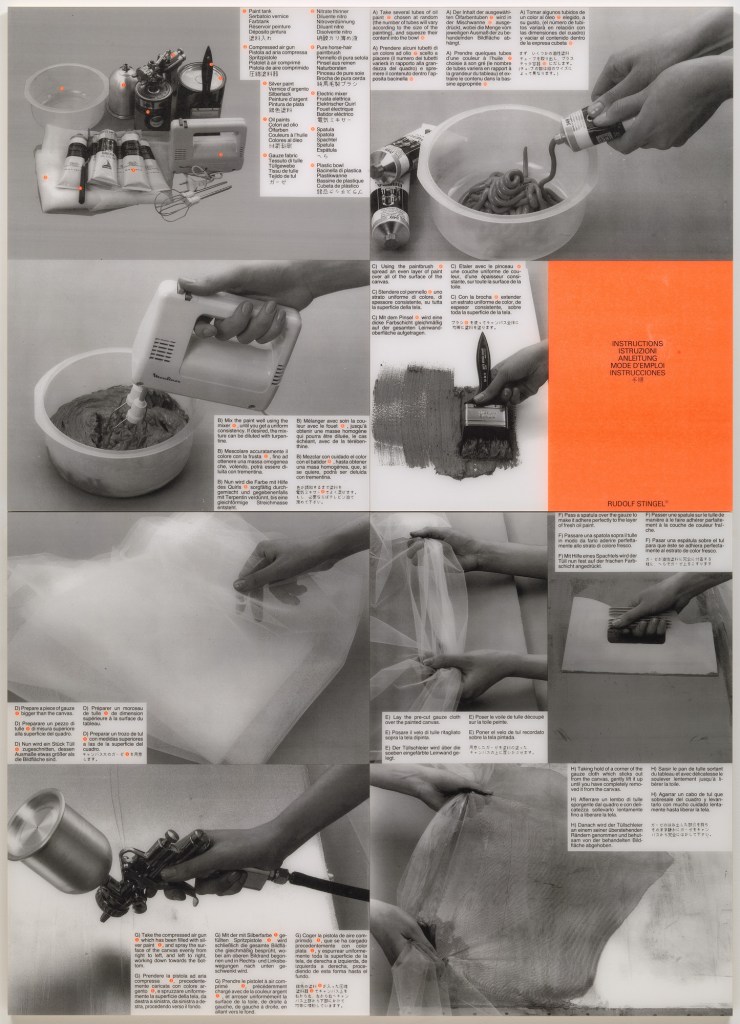
Having looked at Rudolph Stingel’s work Instructions, encourages my thoughts around making my art both specialist to me, and being able to explain my ideas behind the piece itself. I like that Stingel’s work is so specific to, and descriptive of his own process. There’s a thought I have with both Stingel’s Instructions, and my own Perfect* Pop-Up Painting Booth, that despite the dedication shown to including others and making work tangibly accessible, be it through a descriptive ‘how-to’ guide, or from the public being able to interact with installation works themselves – there may be no desire for anyone to participate at all. Perhaps just looking, even for a moment, will be enough for some people, but the invitation is clear from the step-by-step approaches provided, that the art is intended to be inclusive of everyone.
On a visual note relating to Stingel’s Instructions, I really like the grid layout as I find it satisfying from an organisational point of view. I also like the use of bright colours and images within the piece, which make it more visibly engaging, and decorative. The black and white contrast of images next to small details of such bright colour give the piece a timeless feel; as though what I’m looking at is details of an old process still relevant to a modern world. I think if the piece lacked any colour it would feel more preservation-like of the past, and more like something to be remembered – whereas bright, neon colours (particularly orange) add a sense of something still vibrant, and full of life, as well as making the piece look more interesting and visually appealing.
Another artist whose work has been on my mind as I have approached this project is Do Ho Suh, whose exhibition Walk The House, I saw last year (2025) at the Tate Modern. I went along not knowing much about the artist or his work, except to see it was somewhat in relation to architecture – which I have a personal interest in. I was appreciative of how personal Do Ho Suh’s context felt to experience as I walked through the installation. My favourite piece was Rubbing/Loving Project: Seoul Home, which I felt awestruck by the scale of, and spent a long time watching the video accompanying the work, that documented the artist’s process. I liked the simultaneous showcase of the work in progress and the final, huge, outcome.
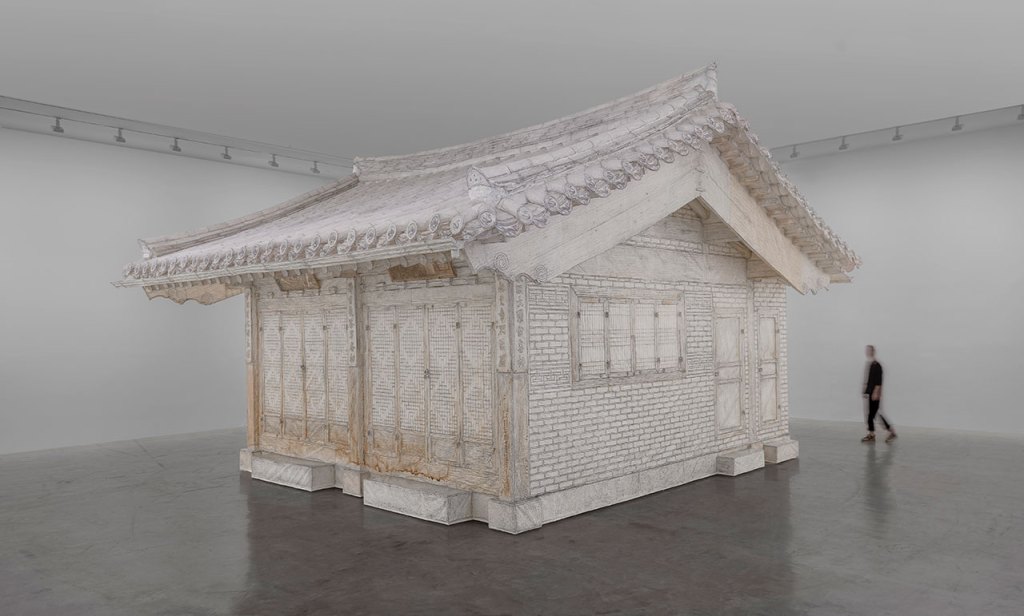
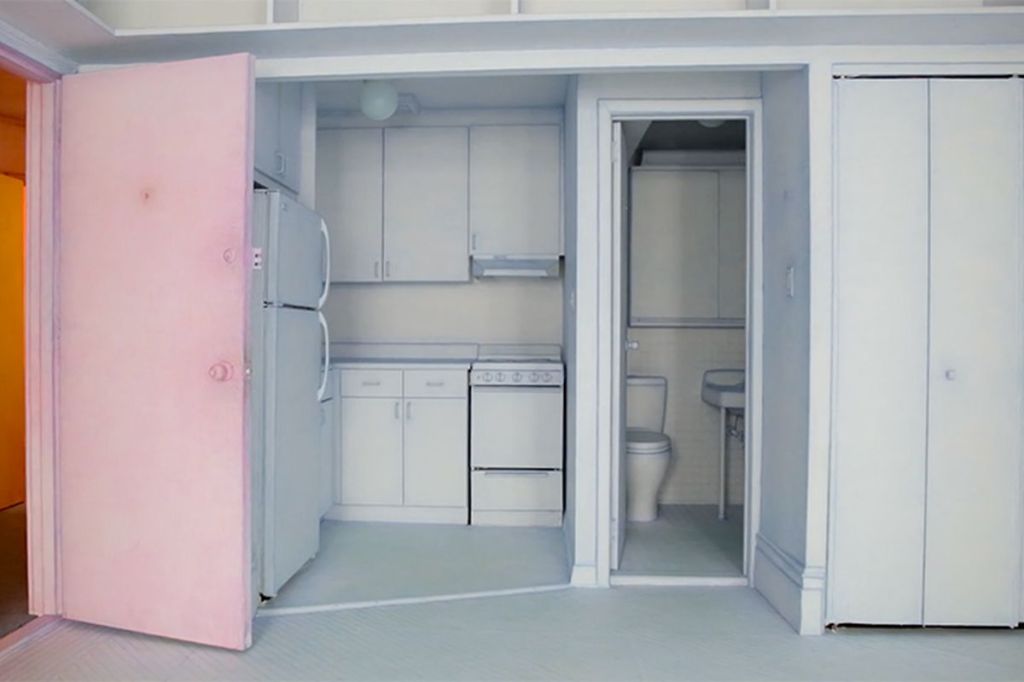
At the opposite end of the room to the above piece was another similar work by Do Ho Suh – Rubbing/Loving Project: Unit 2, 348 West 22nd Street, Apartment A, New York, NY 10011, USA, 2016. Which was an internal trace/ rubbing that the artist had made of his old New York apartment prior to moving. Being someone who has moved home a lot and experienced many ‘end of an era’s, wishing to be able to hold onto good memories made in certain spaces – I love Do Ho Suh’s immortalisation projects (as I see them). I like how transportable they are in paper form and that in theory (and paper) you could recreate a space you have no other access to, anywhere in the world. Visually I think the detailed work on Rubbing/Loving Project: Seoul Home is breathtaking, whereas Rubbing/Loving Project: Unit 2 appears more factual, less detailed but perhaps more of a desperate act to somehow capture the essence of the apartment itself, before possible time there runs out.
Next Steps
As one of the things I had set to act on following my Unit 2 Formative feedback session was to consider different methods of display for my work, I created a digital mind-map using the app Freeform for iPad, listing different ideas I could think of for the literal displaying of my piece. The ideas I came up with felt exciting, especially because they ranged in mediums and creative disciplines, as well as visual or physical outcomes. I found it difficult to narrow down my options too much, and considered whether realistically I could create more than one visual outcome for the piece, by transforming it into a kit, intended for use by anyone and not just myself. This lead me to choose several methods of display, all linking to the idea of a marketable product, albeit a bit of a niche one.
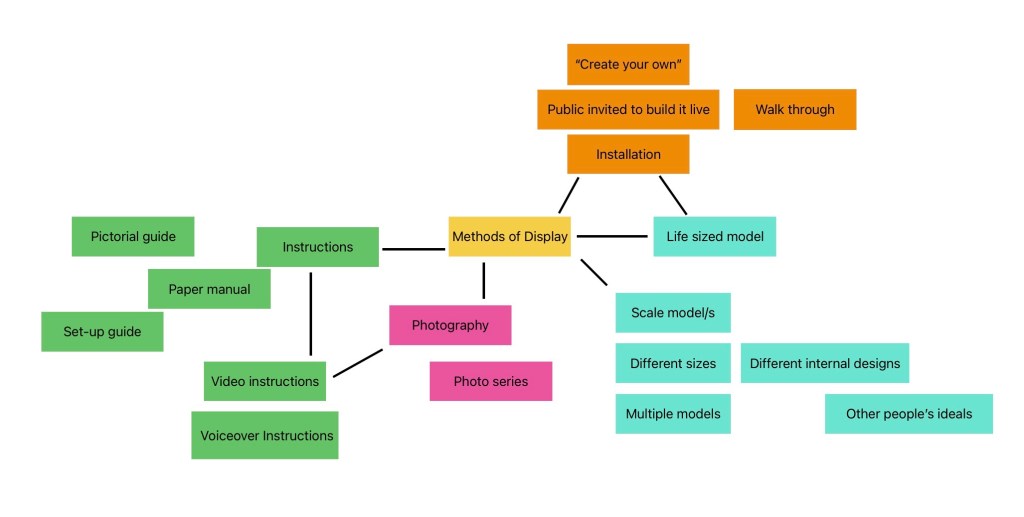
The methods I decided on, which I believed would be fitting for an installation, recyclable, construction-based display were:
- a visual kit list
- an instruction manual
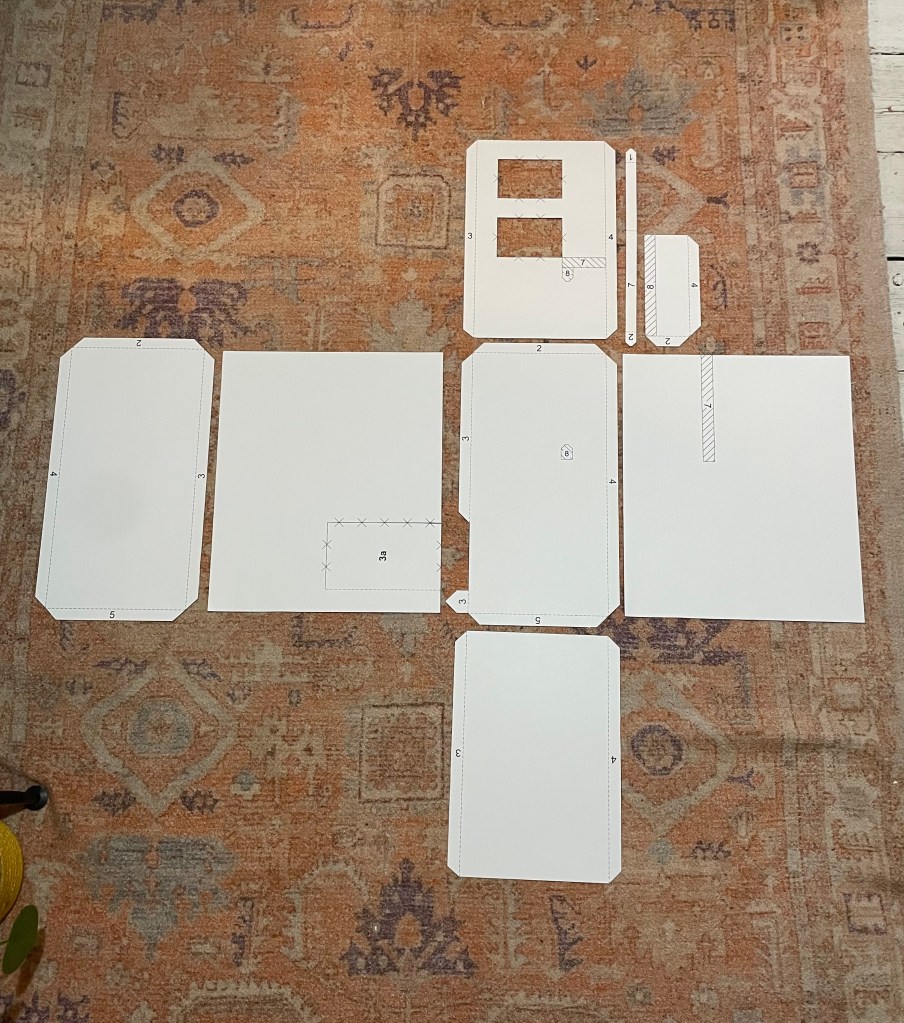
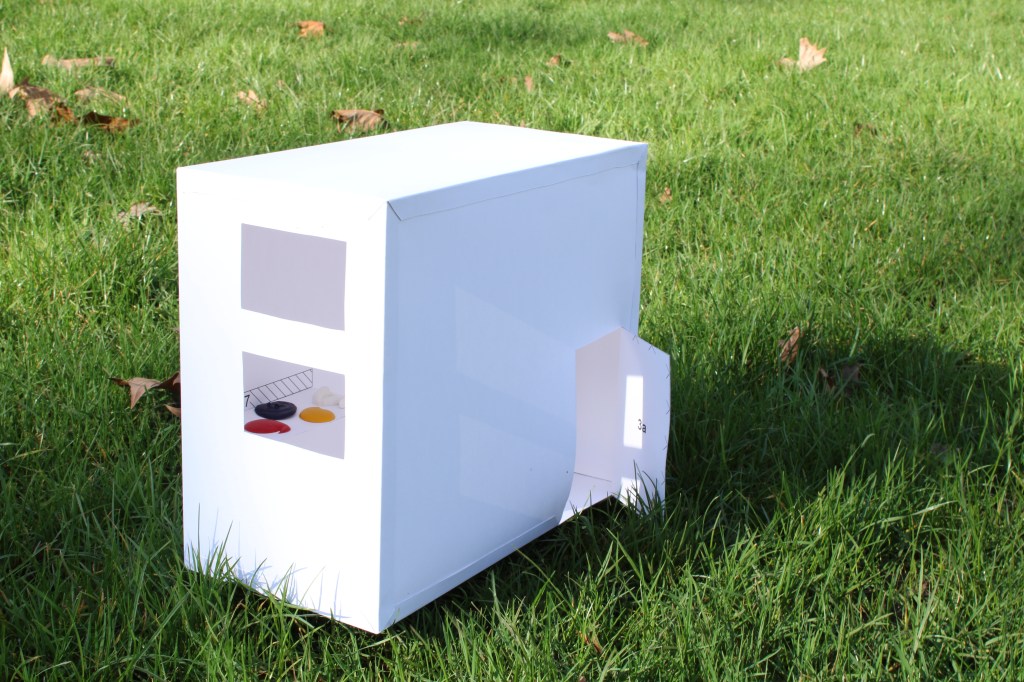
- a small model
- a photographic series
CLICK ON AN IMAGE TITLE BELOW TO LEARN ABOUT THE PROCESS
Planning & Problem Solving
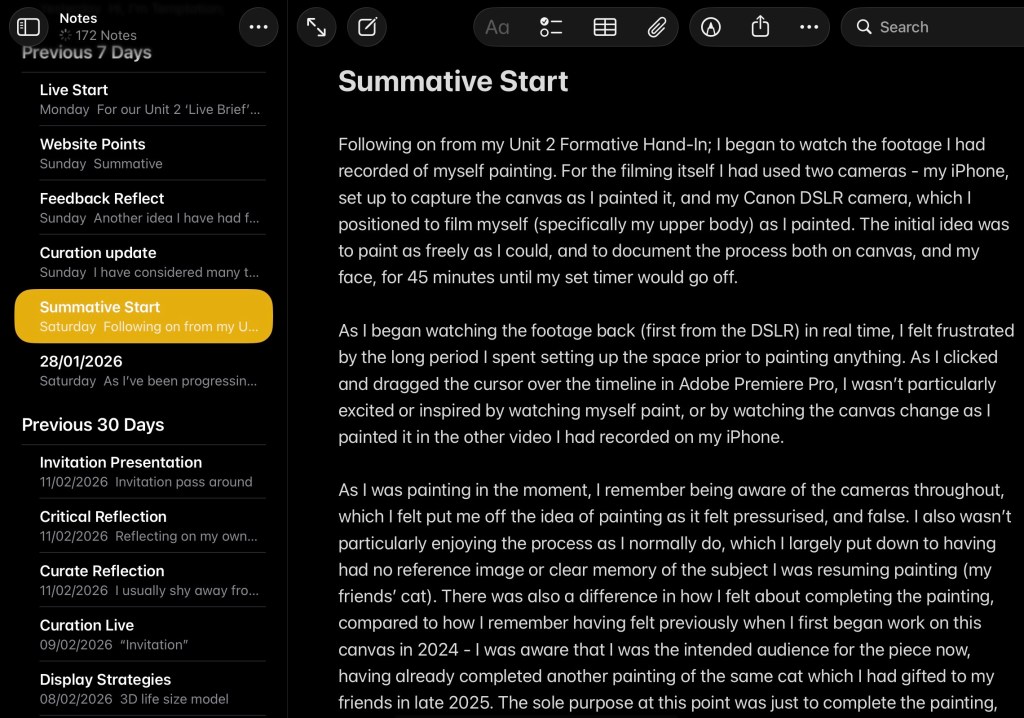
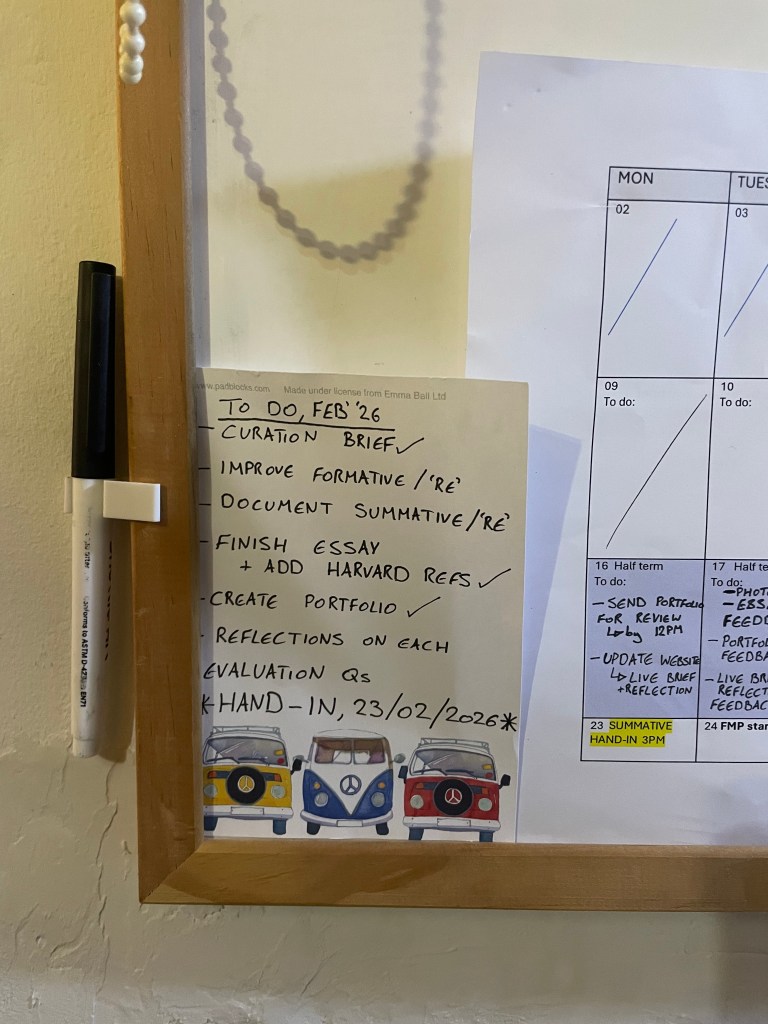
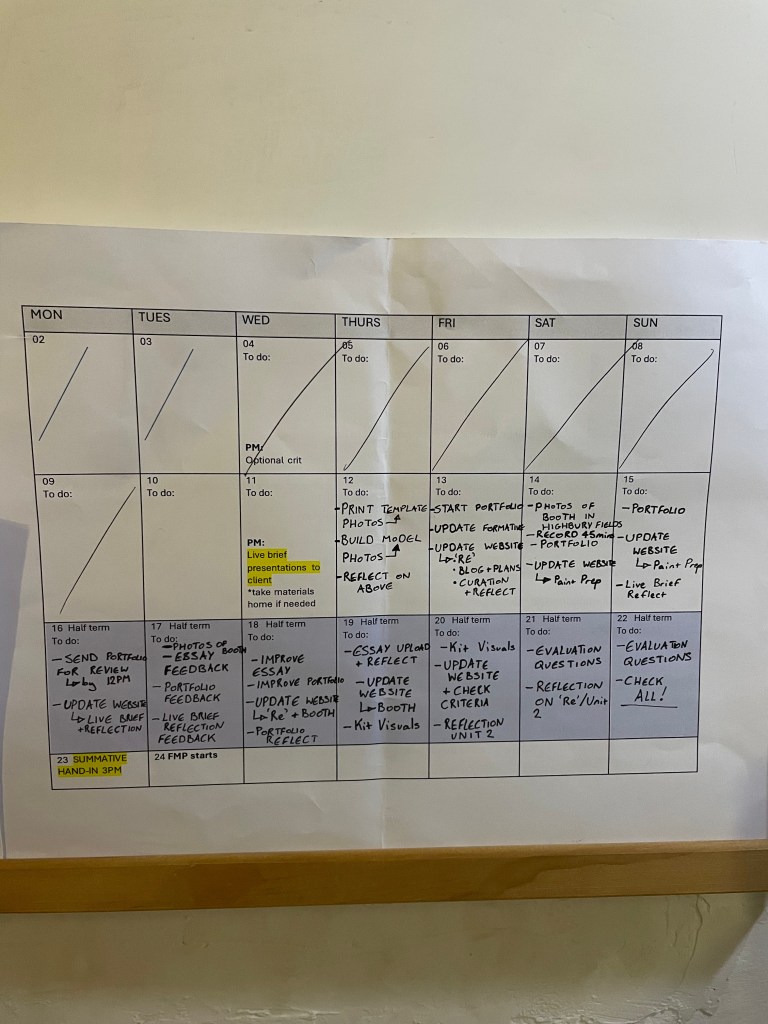
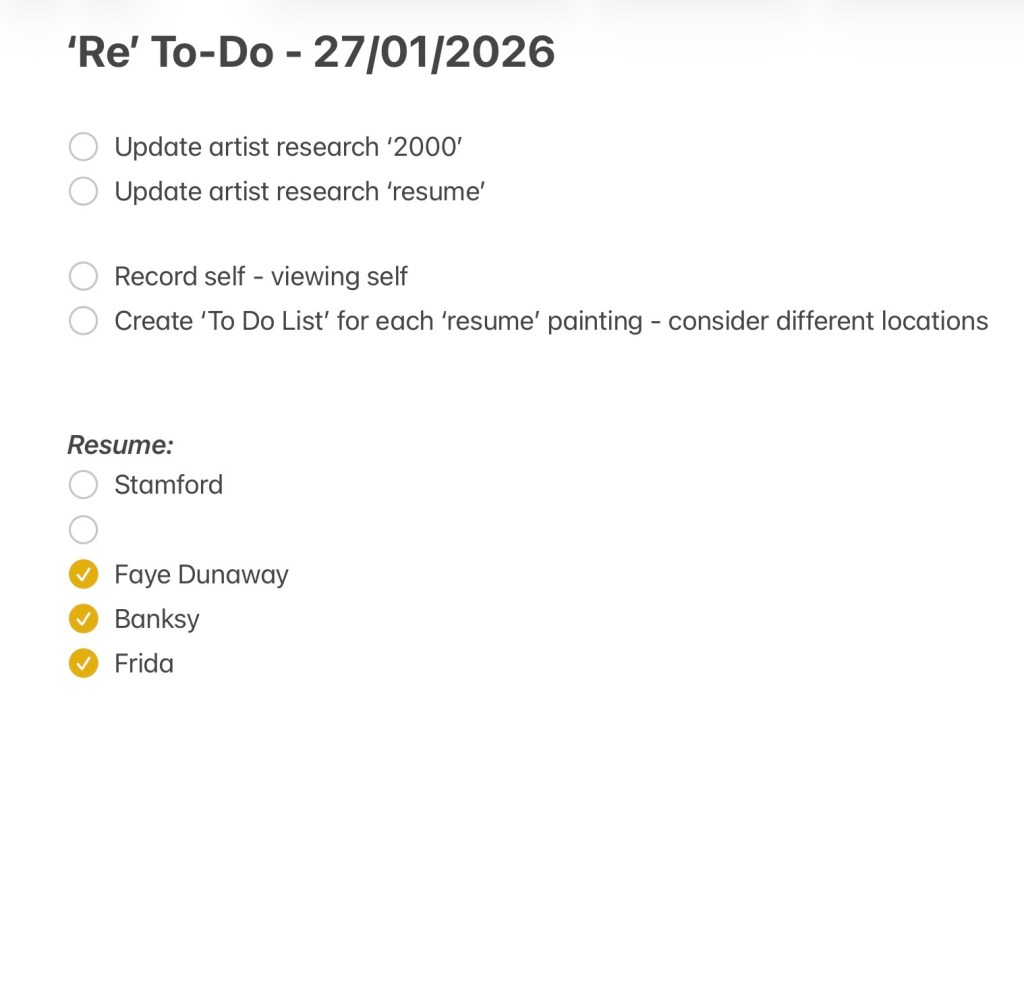
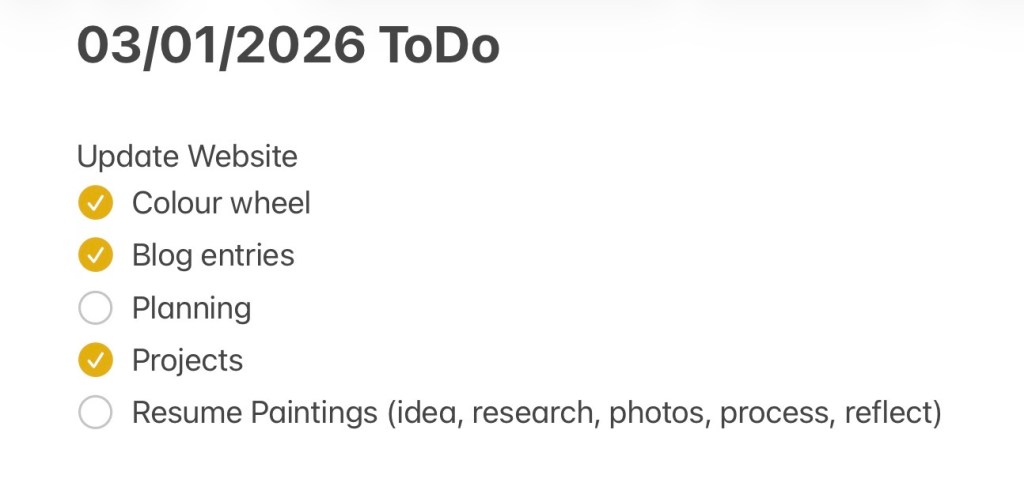
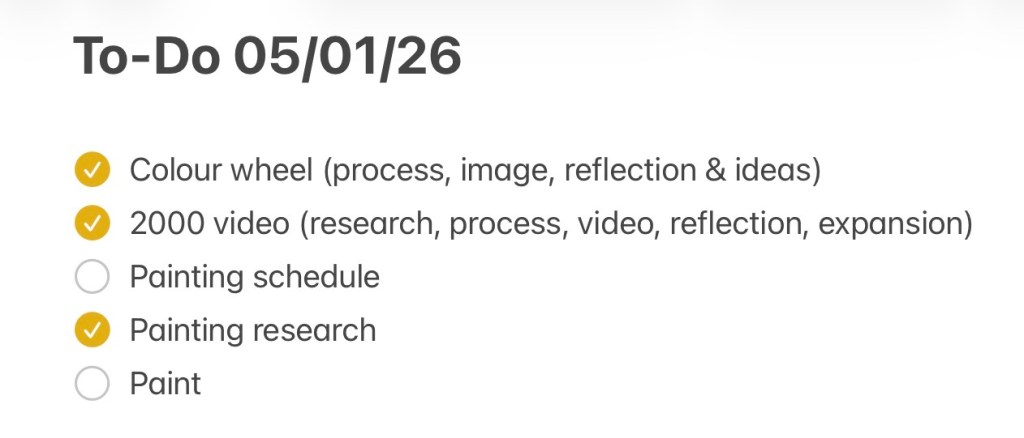
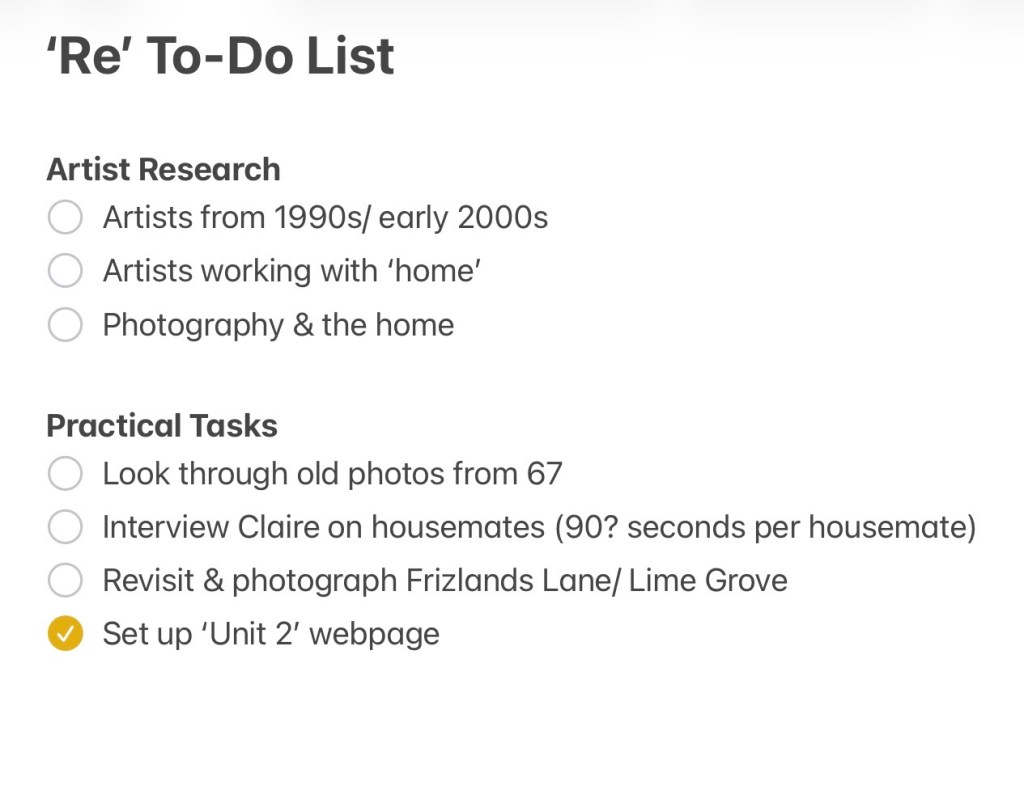
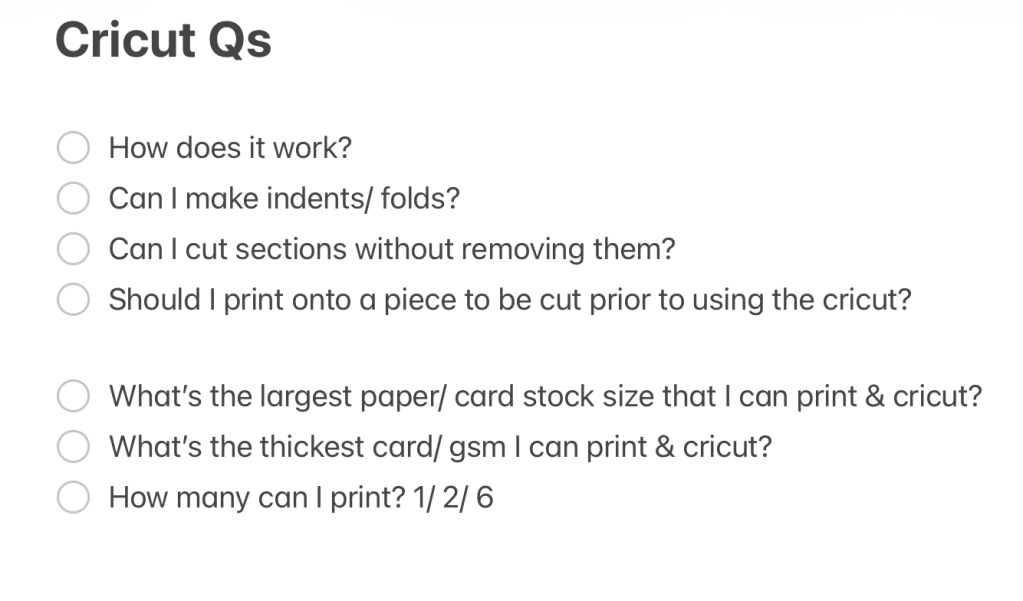
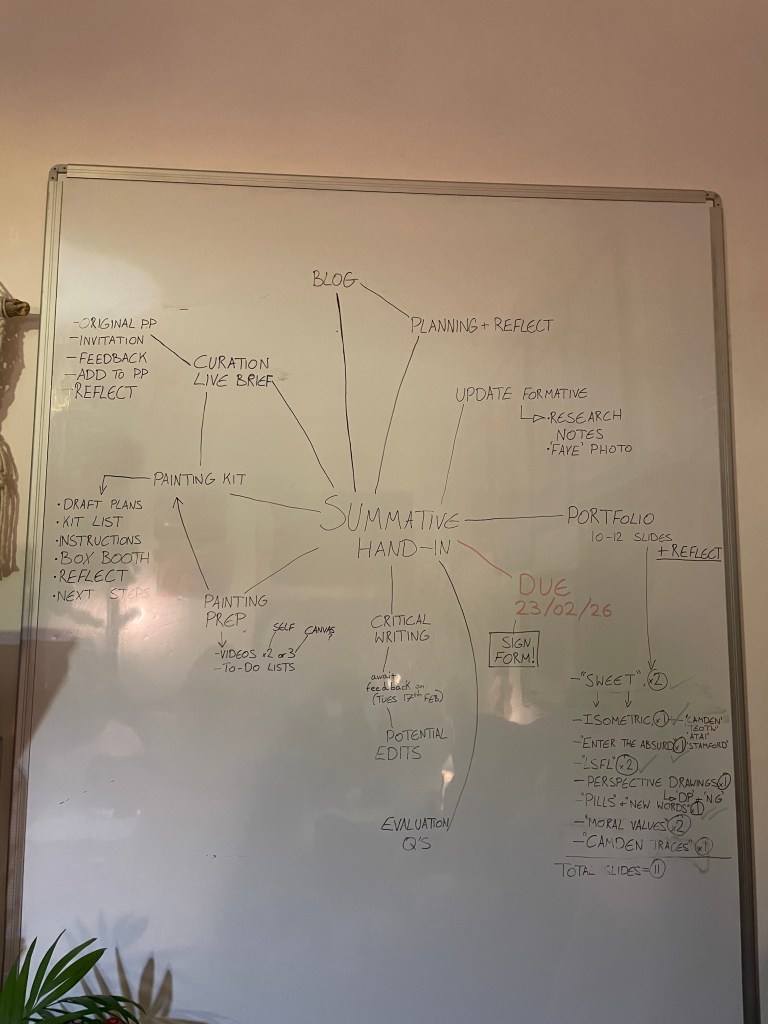
There have been various ways in which I have planned and structured my time for this brief which ultimately has aided me against issues I have encountered as I have been able to prioritise my time – this is something I often feel overwhelmed by, as well as having an influx of ideas. Most utilised was my Notes app, across my Apple devices. I find this a useful way of drafting thoughts quickly when I type on my phone and then I later collate and restructure them into a more presentable format.
I made use of my Creative Journal for a lot of this Unit; I found this a useful way of reflecting and keeping track of ideas, although as I got going with practical tasks I notably reduced my entries.
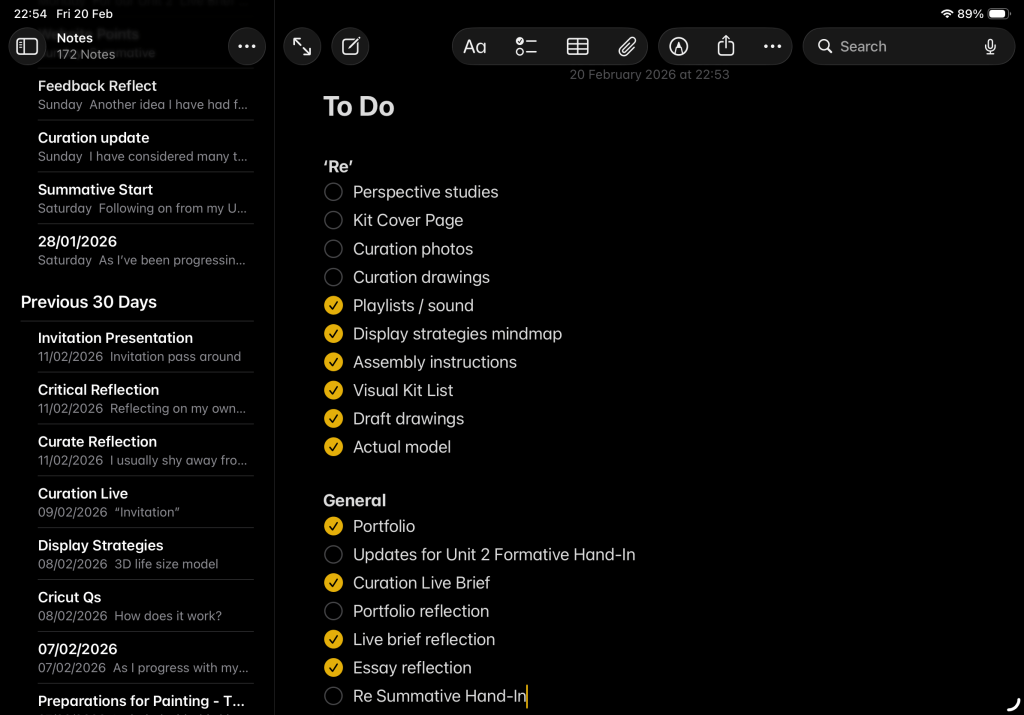
In addition, I have found it necessary to create to do lists (daily/ weekly, and general ones) throughout this Unit. This helps me stay on track and delegate tasks to certain time periods. For this I have also utilised weekly planners.
I hoped to develop my ideas further if I had more time, however at this stage am choosing to be satisfied with all I have so far produced in order to ensure I have time to document my processes accordingly.
The next steps for this piece would be the rough alignment of photographs of my own bedroom within the booth; still working with a small model size; printed onto A3 Bristol Board before being cut down using a craft knife (as I did with the original, prototype booth), or a Cricut machine.
 Squirrel M. Lambert