Raven Row, 25/02/2026
I instantly admired the architecture of the building itself, albeit, it felt as though it was trying to hide behind the painted white walls which displayed artworks.
The works themselves were a mixture of what looked like informational text and artefacts, such as logbooks, or assorted types of data collection for reference. Though, what you would reference any of the pieces in relation to felt a little unknown, but in some ways besides the point as I still enjoyed looking over them.
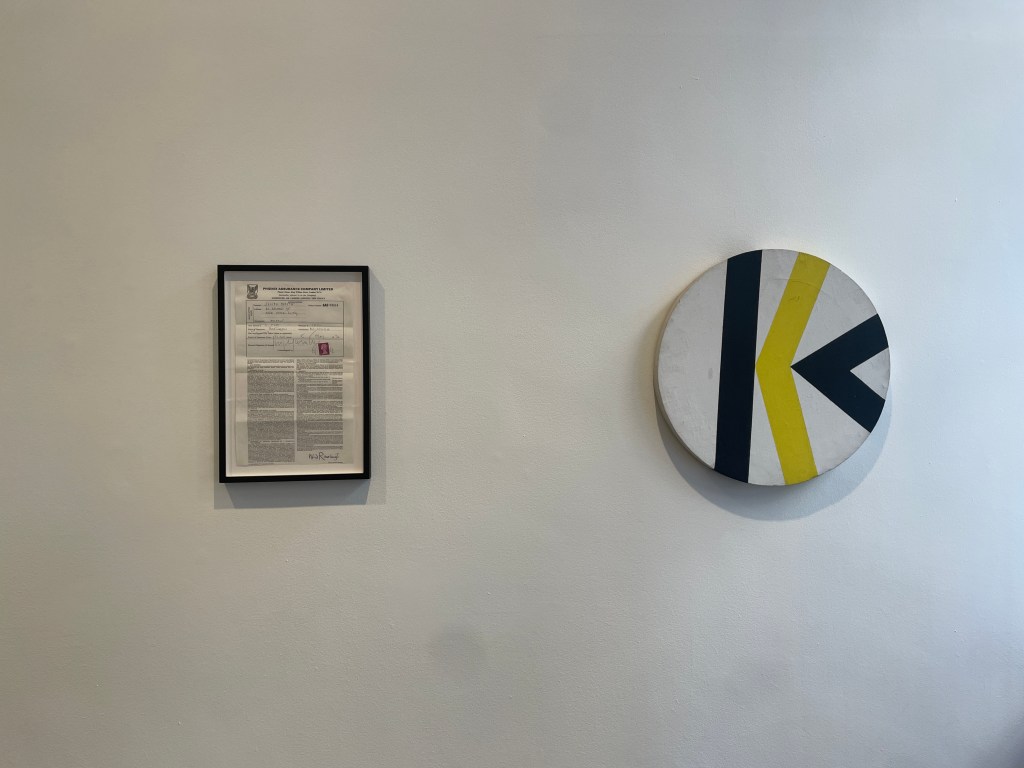
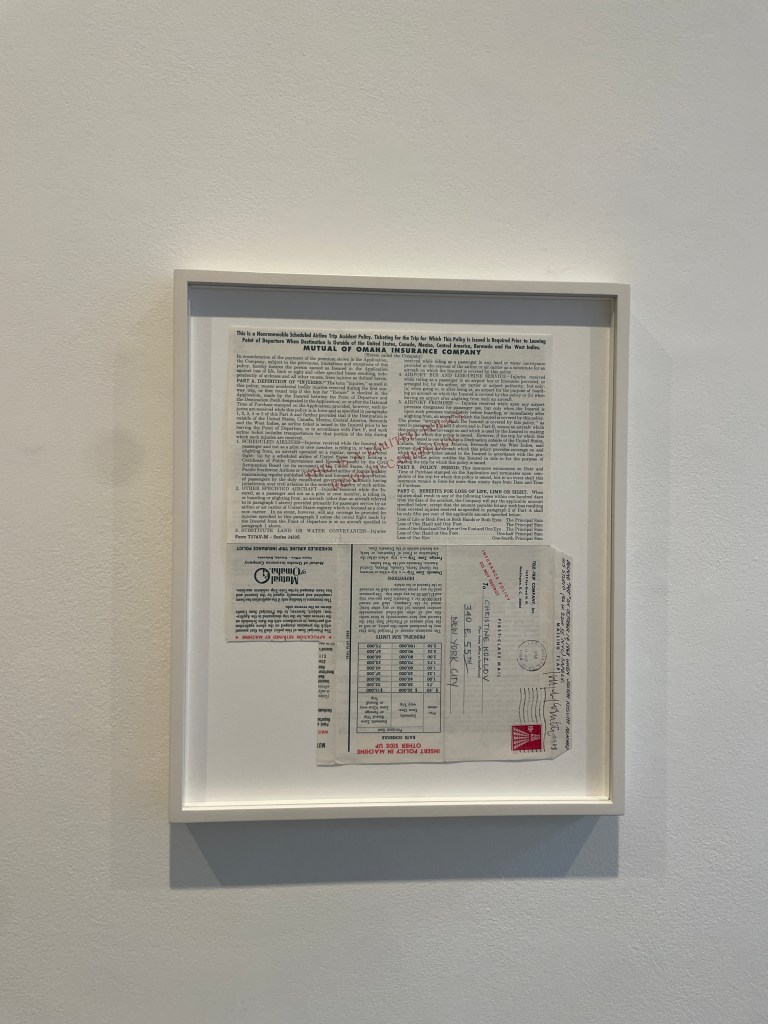
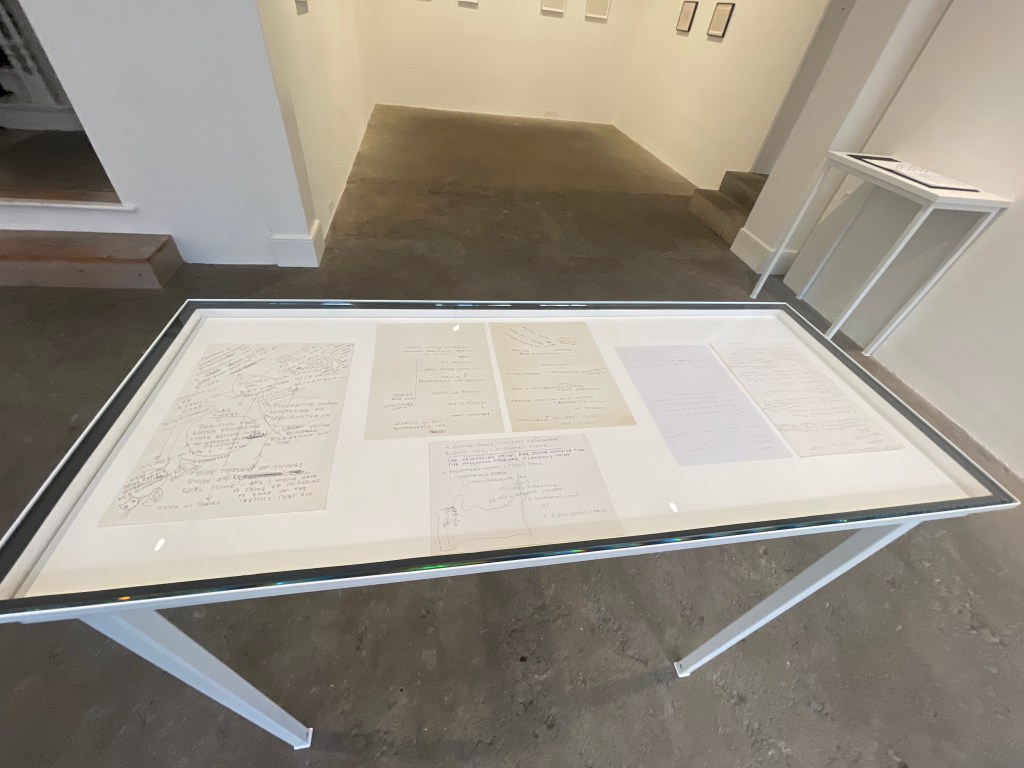
There was no information provided beside any of the artworks as they were positioned in the various rooms, however, a floor-plan guide was handed to me as I entered the gallery. Using it as a code to find my way around and be able to apply some sort of context to my understanding of the work, or at least, to be able to identify who each piece was by, felt like some sort of adventure. I felt I was looking deeper at each piece than I otherwise would have if signs were attributed to artworks on the walls beside them.
The titles of the work, mostly by Christine Kozlov, were also variables of the same, for example – Sound Structure No. 5, Sound Structure No. 4, 1965, and Sound Structure No. 7, Sound Structure No. 6, 1965. This made me question why include each title individually at all in the book. Perhaps to ensure each artist and concept was accurately documented, although from reading each piece’s title I didn’t feel I learnt any more about the work necessarily.
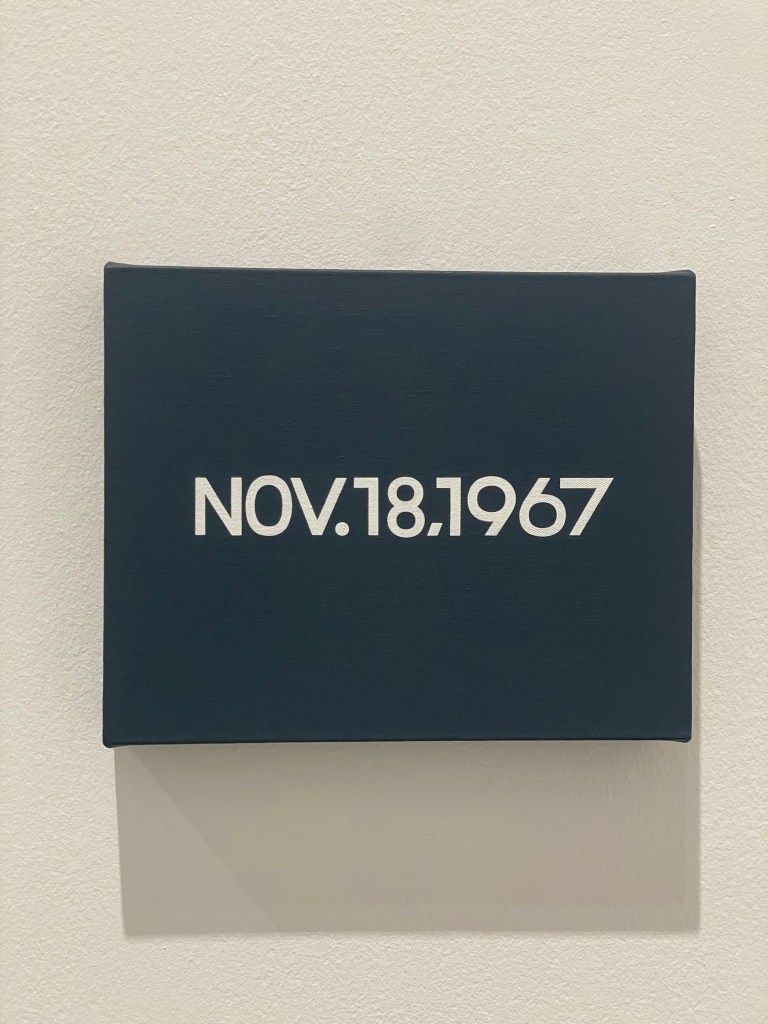
In one of the back rooms on the lower ground floor, I had a bit of a ‘fangirl’ moment when I came across some of On Kawara’s work from the Today series, as I learned of and referenced this recently in Unit 2.
I did feel an influence as I walked around to be utterly conceptual in my approach to my FMP, as I really enjoyed the aesthetic of the displayed, artefact-like work. I’m particularly interested in data-entry as a form of art, and so Kozlov’s work Eating Piece I found humorous, and somewhat poetic in its listing approach.
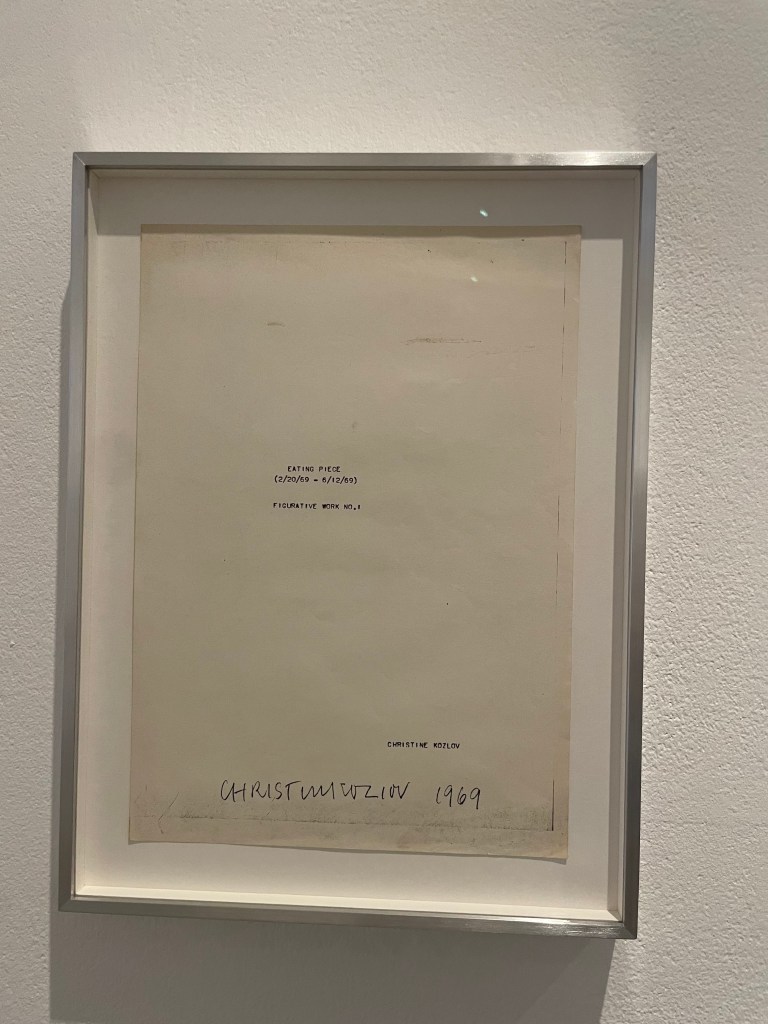
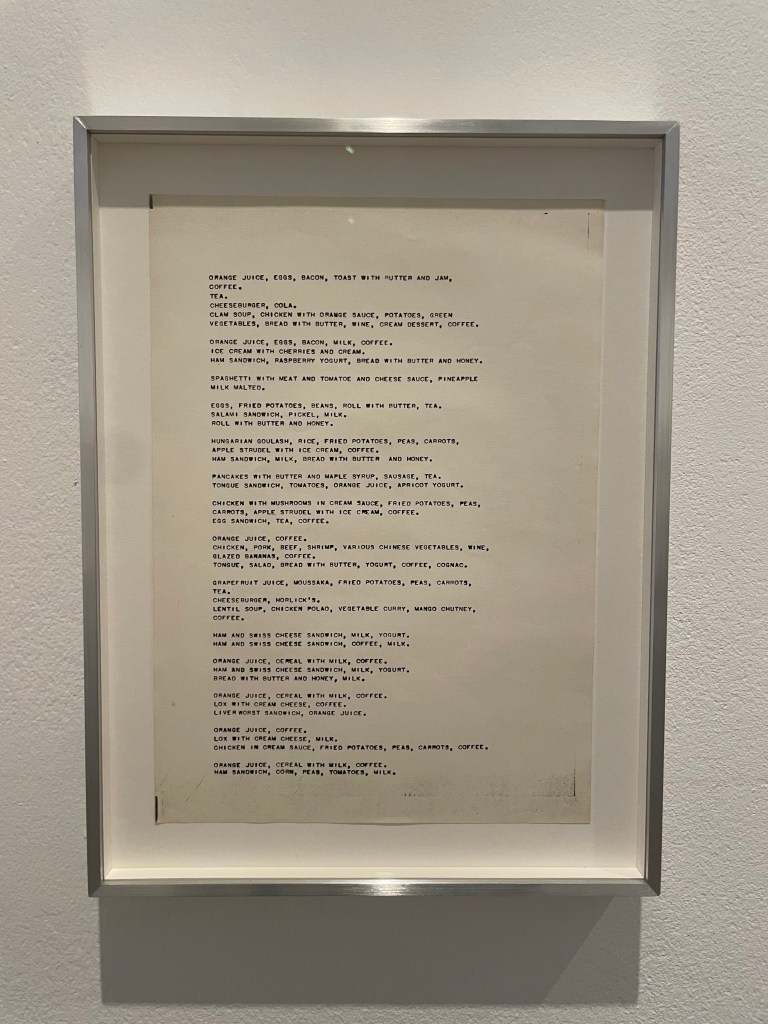
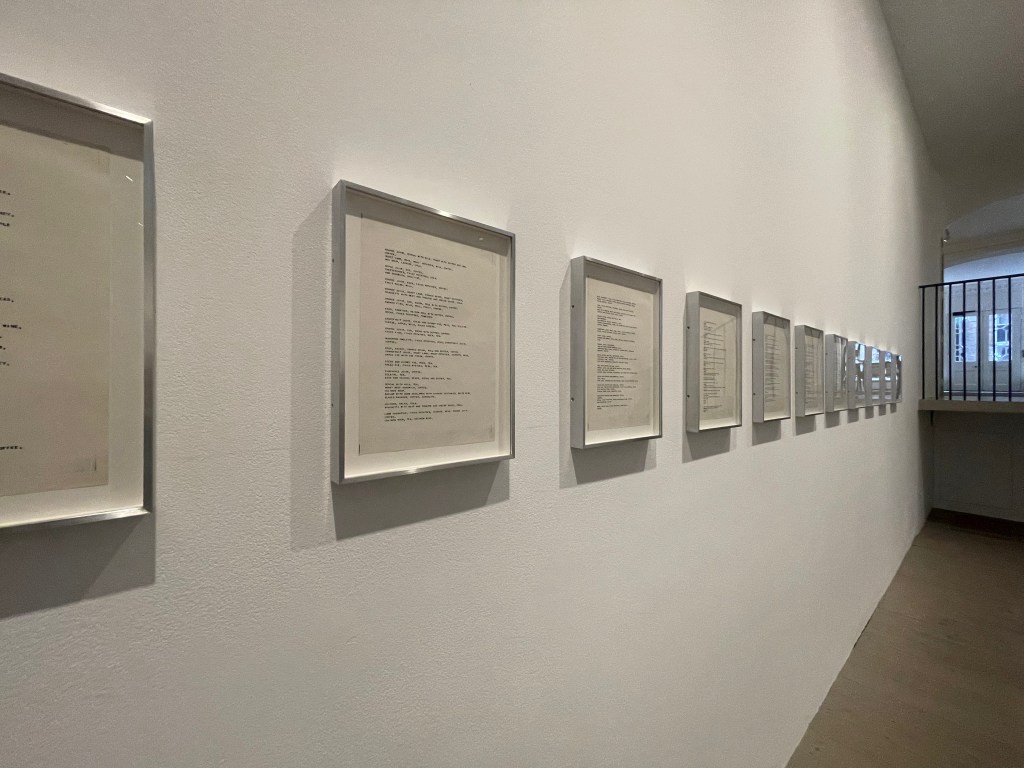
A thought that occurs to me as I walk around and experience this exhibition, which documents many aspects of processes, at differing levels of ‘finished’ – is to ensure I try not to edit out my mistakes throughout my processes. They are seemingly just as relevant as finalised outcomes, and to me, just as interesting to be able to discover.
Upstairs I enjoyed the use of sound, as I felt it was almost calling through the building until I found where it was coming from. This itself felt cleverly anti-climatic as the space the audio was travelling from was in fact just a space, with speakers and a few positioned chairs. It felt as though I had been lured there to sit and consider things for a moment at least. This piece was called The Red Krayola.
 Squirrel M. Lambert